


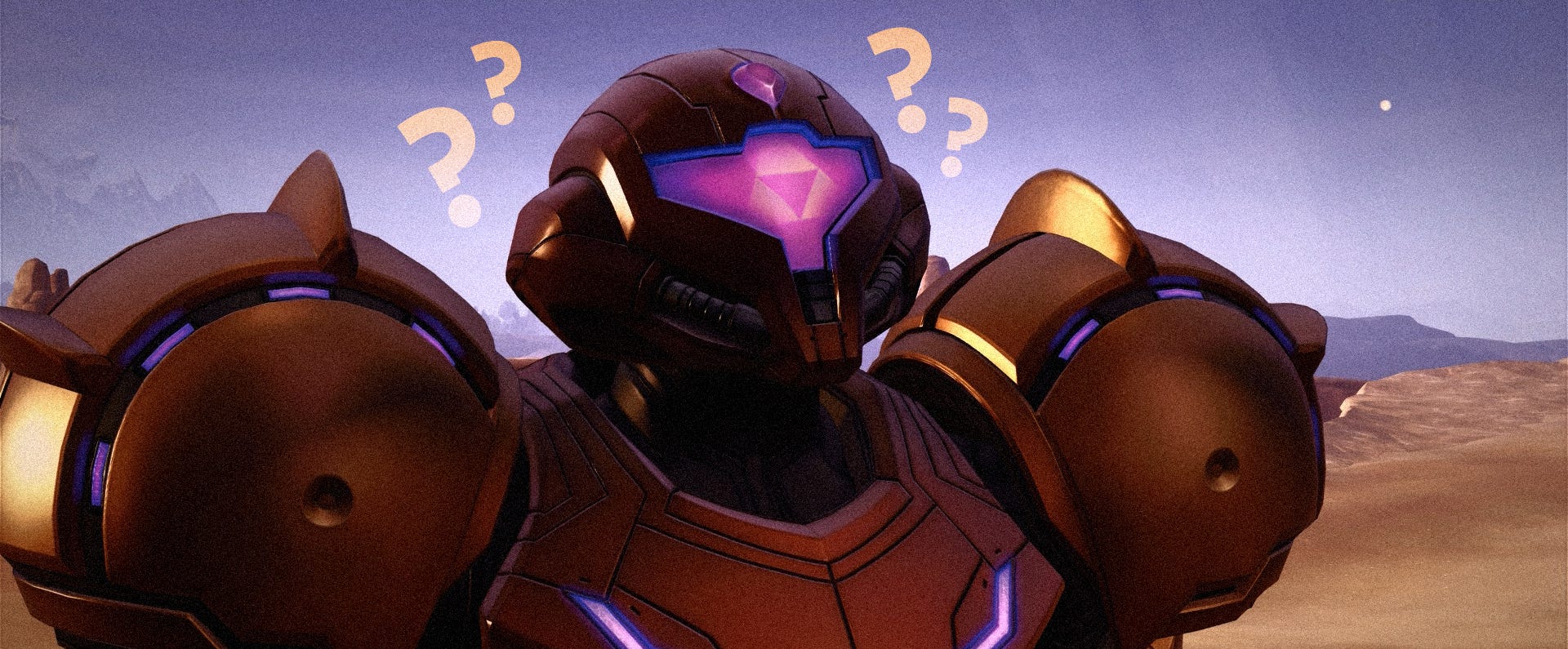
After an 18-year hiatus, Metroid Prime 4: Beyond released earlier this month to decidedly tepid reviews. Its 79 aggregate score on Metacritic makes it the worst Prime game by over ten points and tied with both (gulp) Other M and the weirdly underrated Metroid Prime Pinball for second-worst in the entire Metroid franchise (only the lowly Metroid Prime: Federation Force rates lower at 64). If you’re coming here from my formal review you already know that I enjoyed most of what Beyond brought to the table — but as a life-long fan of the series I’ve got some serious thoughts, feelings, and questions about what it means for the state of the franchise. I’m not going to even pretend to be objective about this, so buckle up while I break this shit down on a more granular level with my Metroid Prime goggles firmly on. Be aware: major spoilers will follow for Metroid Prime 4: Beyond’s story and gameplay systems, as well as the ending of both Metroid Prime 3: Corruption and Metroid Prime: Federation Force. You have been warned!
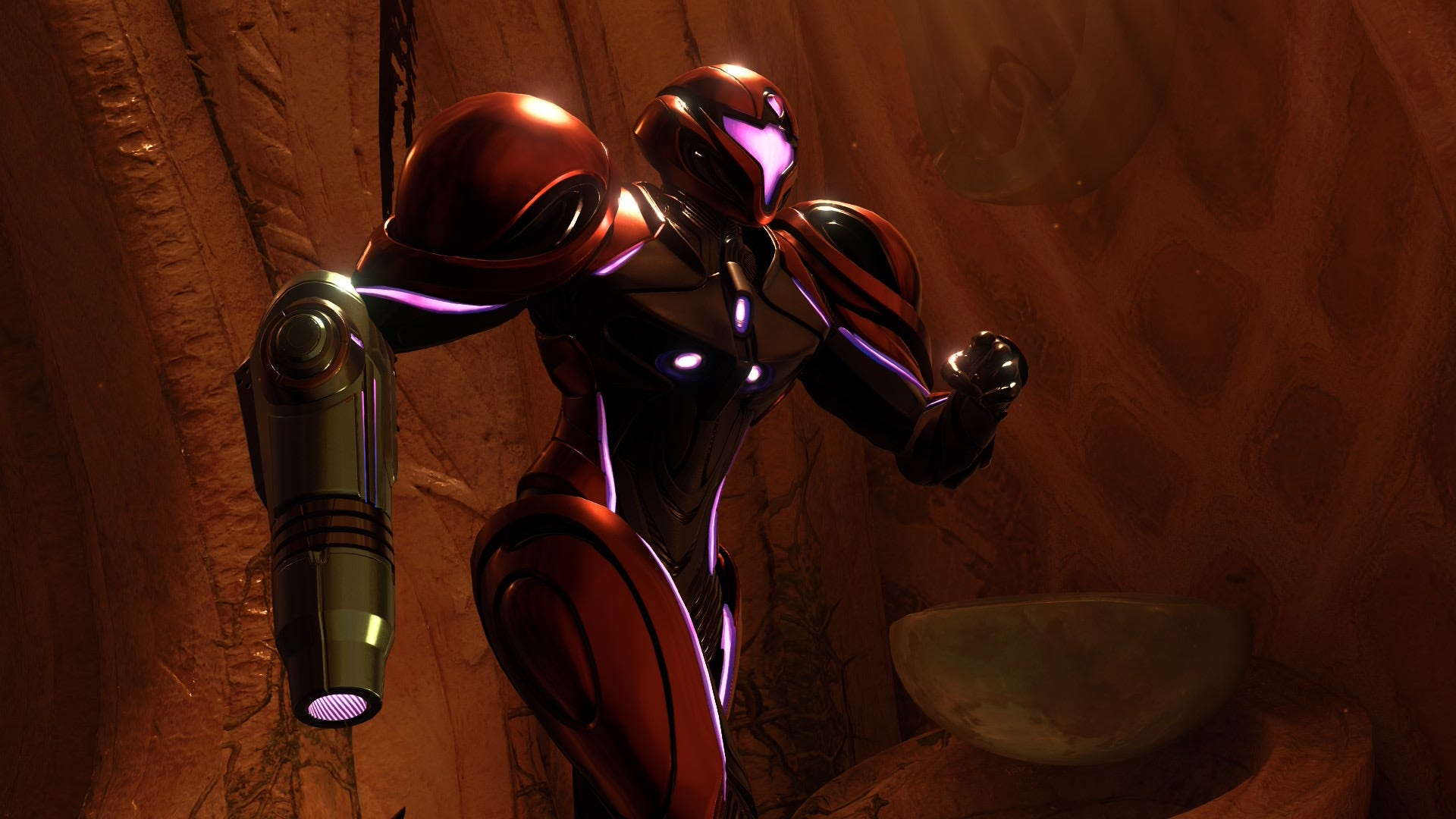
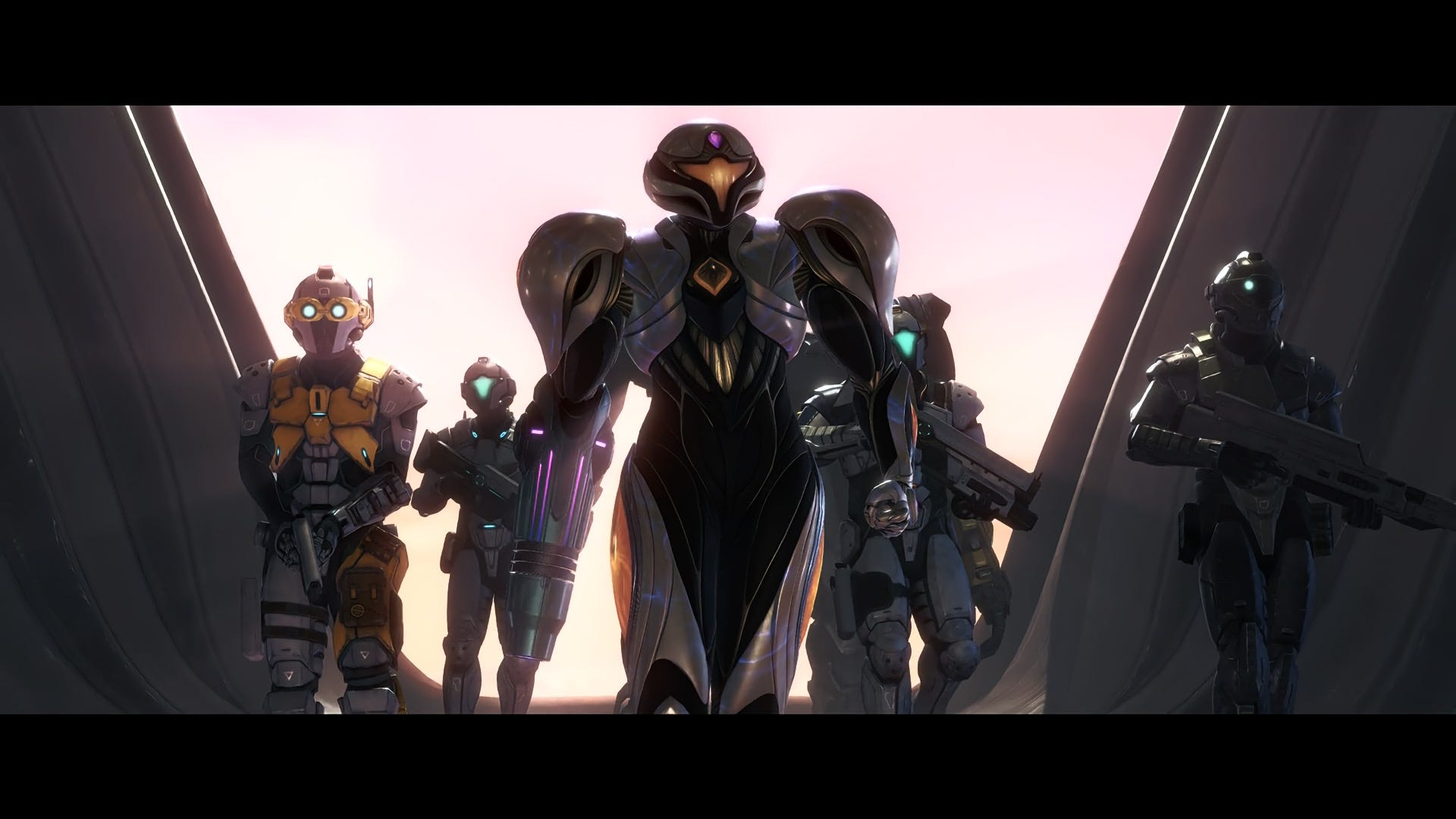
Let’s get right into it with Sylux and what the game’s ending does to break from series tradition. I mentioned in my review that series producer Kensuke Tanabe said he wanted to make a game that explored the history between Sylux and Samus. Long-time fans know the bread crumbs we’ve been following: in the ending of Corruption Sylux’s ship appears and seems to pursue Samus, and in Federation Force if certain conditions are met players see a special cutscene of Sylux stealing an infant Metroid from a Galactic Federation facility. He featured prominently in the game’s trailers and was clearly positioned to be the primary antagonist and a major driving force in the story.
Imagine my profound disappointment at the end of my playthrough when he appeared in — and this is not an exaggeration — less than five minutes of game time before the final boss fight. Two skirmishes with him in prior mid-game sections turn out to be fakes — Psy-Bot enemies taking on his shape for reasons largely unexplained. It’s the prologue, the red herring fights, the ending, and that’s it — a narrative nothingburger with regards to the Sylux-Samus beef. The choice to put this front and center in marketing is deeply confusing at best, and to series die-hards like me it’s borderline offensive.
It gets worse. Sylux is seemingly vanquished at the conclusion of the final encounter, blasted into the empty void he transported himself and Samus to. Samus returns to Viewros and activates the master teleporter to return our heroes home, only for Sylux to rematerialize and start blasting away at their only hope to get off the planet. The plucky Galactic Federation troops I’d collected like Pokemon cards swarm him and tell Samus to get out of there while she can, and then the game forced me to activate the device and leave all of them behind to face certain death. That’s right — Sylux is still alive, the NPCs that have been shoved down our throats all game long are left for dead, and the game is over.
Then, gated behind 100% completion is the shoe drop I’d been waiting for: a cutscene that explains the origins of Sylux’s hate for Samus. But even this isn’t particularly interesting or well thought out. He wanted to steal a Space Pirate weapon when he was still enlisted with the GF, the weapon went off and massacred his unit, Samus blew it up and he…didn’t like that. I guess?
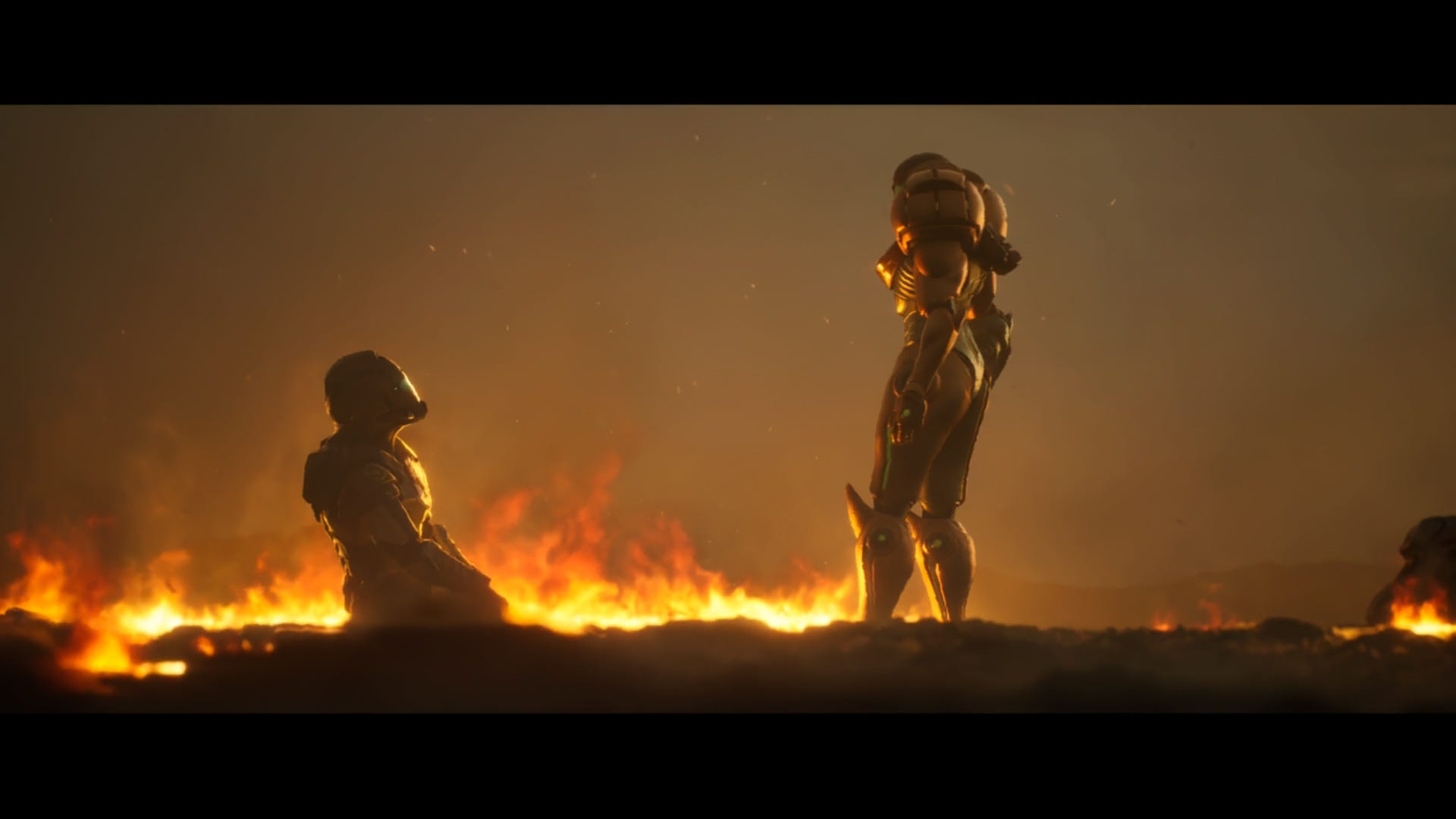
I’m willing to entertain the notion that this is kicking off one or more future games that use Sylux as the continued antagonist (like Dark Samus before him). If Retro is indeed sequel- or trilogy-baiting here, the relative dearth of information on Sylux and placing his backstory at the conclusion of this game will get better in hindsight. There’s wisdom in not playing your full hand right from the get-go and instead spooling out information over the course of future entries. There’s also a non-zero chance this is the entirety of Sylux’s story and there’s no plan to come back to him again in the future, which would make these things get a lot worse. But regardless, his hate for Samus still makes no damn sense. It was high key his fault he got messed up (FAFO at its finest).
More importantly, trying way too hard to get me to care about a group of random troops only to force me to leave them to their deaths at the end feels cheap. If somehow they survived that’s no better, as we already did the “nobody dies in a Nintendo game” fake out with them just a few hours earlier in the Great Mines! It’s a mess and it didn’t need to be with this much time and, supposedly, a narrative plan already in mind from the series producer. Unless this was the plan, in which case…yikes, a tease ten years in the making and you give us this?
But there’s greater things at stake here than narrative missteps. I wrote at the tail end of my review for Beyond that:
“...the signifiers of a great Metroid Prime game are there but feel superficially realized. It’s a pretty darn good game — but is it a Metroid Prime game? What does that even mean anymore if this is the direction the franchise is taking?”
There are a myriad of design choices that cut away at the heart of what it means to be a Metroid Prime game. Let’s start with the scan visor, as it’s arguably the most important piece of what made Prime feel so unique. This thing was a dweeb’s best friend back in 2001. Every random computer in the Space Pirate research facility in Phendrana Drifts carried distinct and interesting text even if they didn’t add an entry to the logbook. In the Ice Belt, I felt familiar echoes of this design idea (maybe too familiar, as an aside) in a research room full of computer monitors: hell yeah, gimme that sweet lore. Yet what I got was the bare minimum, with every single terminal in the room yielding the same damn text. Scanning things on the quest for 100% logbook completion used to feel like a treat. I remember telling my brother “I’m on a scientific mission!” during my first Prime playthrough (he scoffed, but I had the last laugh when we realized it was part of getting 100% completion). Now, you’re going to read a bunch of dull text on the way to the stuff that actually matters. In a similar vein, the Lamorn lore entries are rote and factual where Chozo and Luminoth lore was evocative and mysterious. Compare for yourself below:
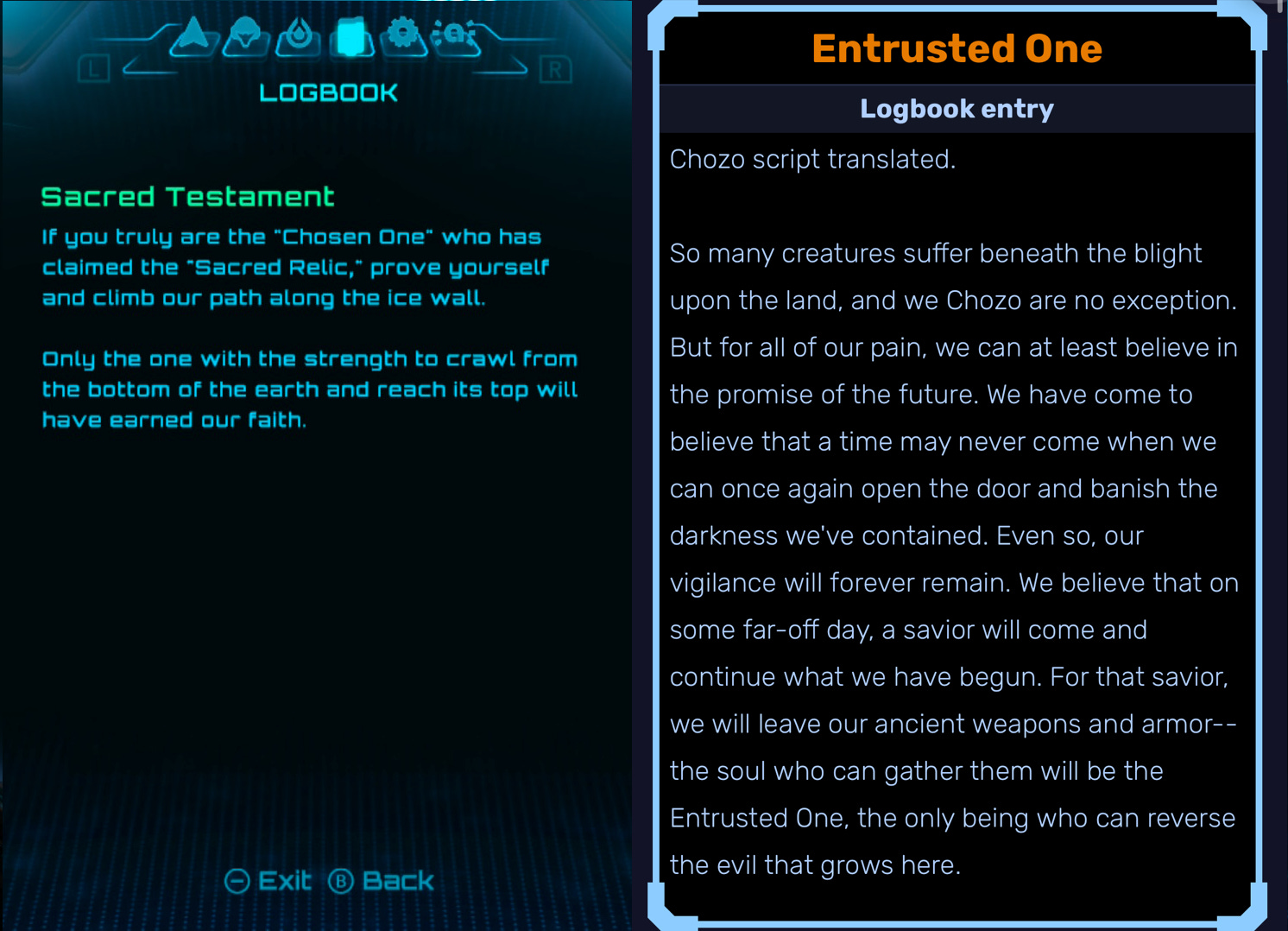
Did the original Retro Studios team need to go that hard on lore and entirely optional text on random computers? Absolutely not. But they did, and it became an intrinsic element of Prime’s appeal. This feels half-assed by comparison and loses the power it had to satisfy our curiosity and encourage us to go deeper into the world. If the scan visor is going to become a rote exercise, are we still playing a Metroid Prime game? I’m not so sure.
I’ve already hit this at length in my review, but the blathering NPCs are a pretty big violation of the sacred explorational silence that defines Metroid games. If they were going to break this tenet of the franchise, you’d think they would make it worthwhile. But no — their dialogue stinks, they have almost no personality of any kind, and I constantly had to spend group combat arenas reviving their useless asses instead of smoking bad guys. Corruption had voiced characters, but at least had the good sense to confine them primarily to cutscenes. Mackenzie especially is the worst kind of modern Nintendo forced tutorial. I couldn’t even upgrade my arm cannon without bringing shit to him to work on first. Why couldn’t I just put the elemental chips in there myself? Surely this isn’t the first time Samus has incorporated alien tech in the moment (it’s not, it’s happened three times with non-Chozo tech in the Prime series alone). But it was yet another way to try to justify their inclusion that ended up making me hate them more.
Eventually, the game stopped asking me to invest in them and just forced me to in the final battle. After hours of anticipation, squaring off against Sylux became an unbearable game of running around in circles reviving half-dead Galactic Federation troopers. Nothing says “final boss” like breaking the flow of combat to heal NPCs! Presumably this is to make the ending hit harder? I still felt nothing as they said their last goodbyes. This fight would have actually kicked a ton of ass without this — it’s well-designed and at times genuinely difficult. Instead, it’s another instance of Retro stepping on a rake trying to turn Beyond into something its predecessors were not.
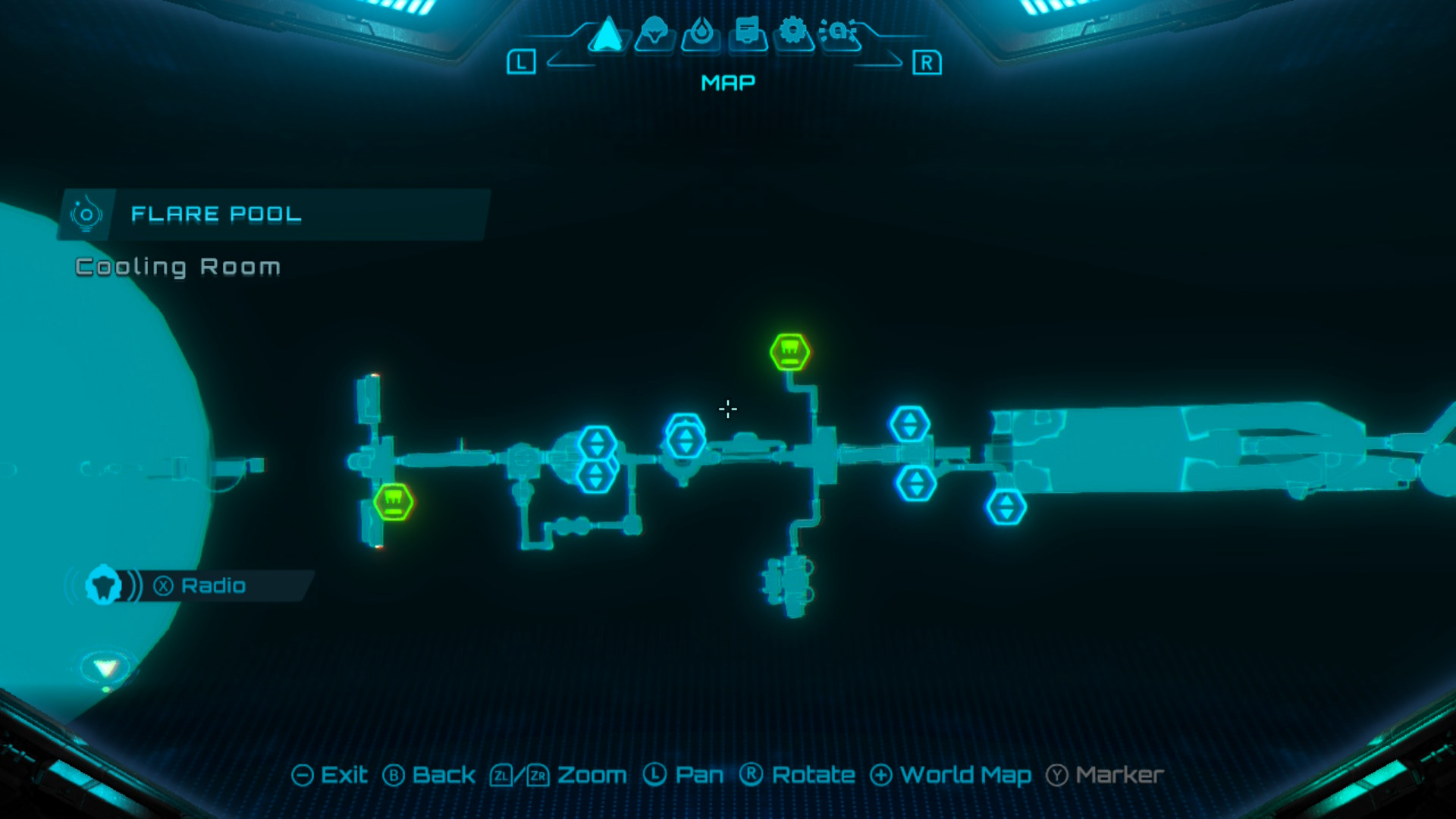
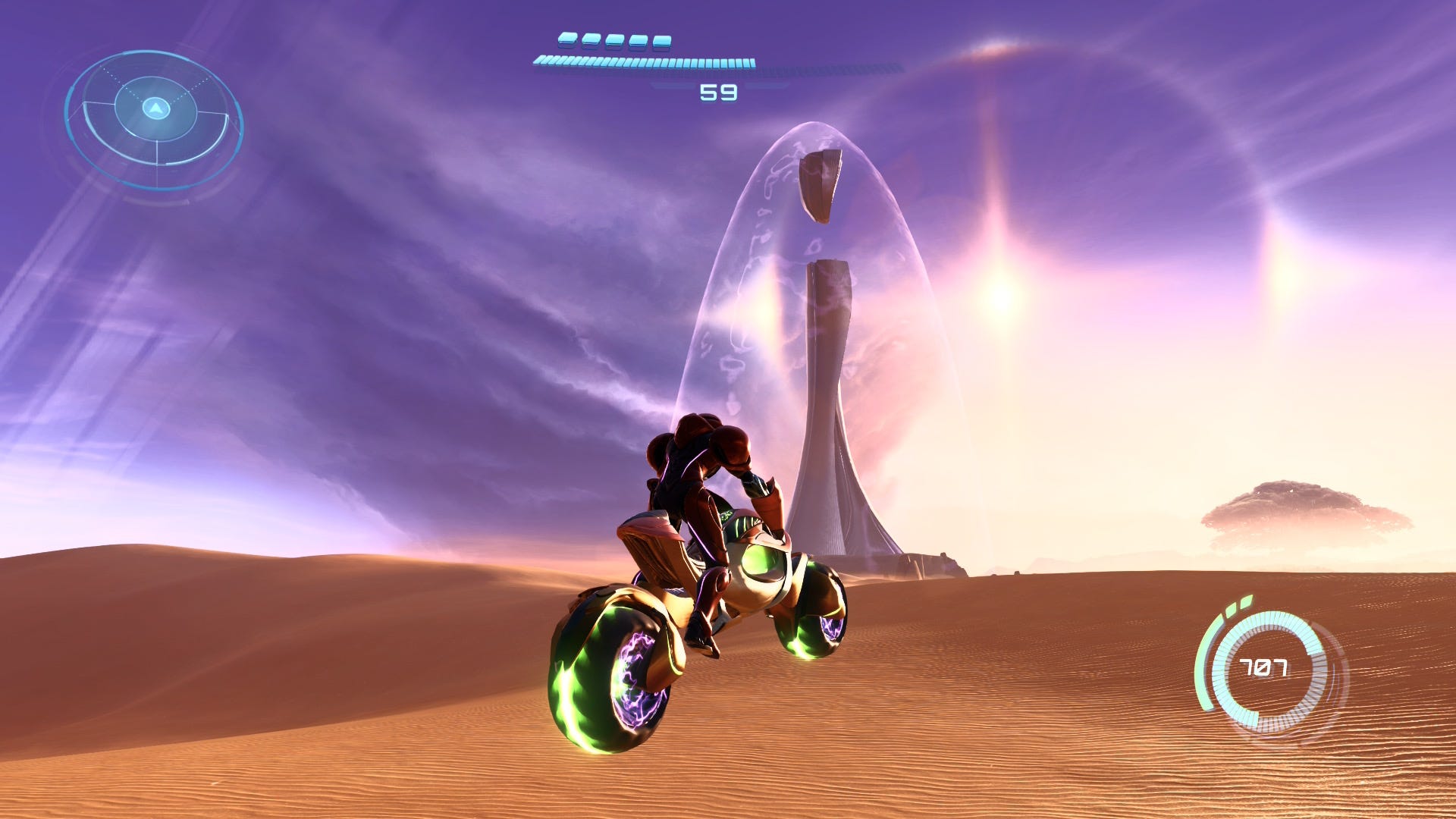
Here’s the big one, though: the map and level designs are just straight up not Metroid at all. What’s there is pretty to look at and scored beautifully but the maps don’t connect with one another, and offer zero shortcuts to discover down the line. Each zone is a series of mostly linear pathways that involve progressing further with the ability acquired in that zone. Return trips almost always involve opening doors using elemental weapons called “shot” that take the place of traditional beam swapping or stacking. At the heart of it all is the expansive Sol Valley. No major story events happen out there, no required abilities are hidden in the shrines, just green crystals as far as the eye can see. Motorcycle joyriding aside, there just isn’t enough here to justify tearing out a design philosophy that is used in literally every game in the series, hell — the entire genre!
Individually, none of these are deal-breakers. Taken in sum, they not only grate on my sensibilities as a fan but also paint a picture of something that I could swear I’d seen somewhere before. Let’s see:
A shadowy antagonist with very little actual screen time who will probably return in future entries
An insufferable companion who never shuts the hell up and desperately wants to spoon-feed me where to go and how to play the game
Mediocre NPCs with badly written dialogue used to populate the world and create human interest
Mostly linear zones navigated with abilities acquired within them
Elemental weapons with consumable ammo used to open doors
A huge, mostly empty hub area used to access individual unconnected zones…that you traverse on the back of a steel horse??
Son of a bitch, this is an N64 Zelda game! Retro trojan horse’d a 3D Zelda into my beloved Metroid Prime franchise!
Is this as well-executed as a classic 3D Zelda? Probably not, although I don’t think those are as good as people who first played them as children think they are (Ocarina is a solid 8/10 and its best version is trapped on a shitty handheld, don’t @ me). But also, that’s not the point. I didn’t want a below-average first-person 3D Zelda. I wanted a Metroid Prime game, made with as much love and care as the preceding three entries. I don’t want a hub zone and a motorcycle, I want to see a densely-knotted world reveal its interconnected pathways to me piece by piece. I don’t want SPC Navi constantly hijacking my audio-visual experience until I comply, I want some goddamn peace and quiet (+5 to my Dad skill, just in time). I want to get lost in an alien world one scan at a time, not perfunctorily mash through crappy flavor text. This just feels wrong, like using George Bernard Shaw’s name in relation to My Fair Lady. Yeah, the bones of Pygmalion are there, but he would have haaaaaated it (if Lerner & Loewe hadn’t waited until he was already dead to bastardize the source material). It’s a great musical — Beyond is a pretty darn good game — but it’s not the one I wanted, and frankly I don’t think it’s the one I deserve as someone who has been devoted to the franchise for nearly 25 years.
So…what are we left with? This ain’t my Metroid Prime, that’s for sure. If this new kinda-3D-Zelda direction is here to stay, I think I’d prefer them to find another subtitle and run with it. It would be a disservice to the original games and to this new iteration to associate them with each other. But man, if Metroid Prime 5 can’t course correct back to what once made the series great…it’ll be fun, probably exceed Beyond in quality, but I’m not sure I’ll care enough to quibble about the title anymore. And that damn near breaks my heart.