In sixth grade I played Metroid Prime and fell head over heels in love with a video game for the first time. Over twenty years later, Prime somehow has no direct competitors or imitators and still defies categorization. “First-person atmospheric puzzler” doesn’t print well on a label, and even if it did it still wouldn’t really do justice to the singular nature of its gameplay. Using the first-person shooter medium as a vehicle for immersion rather than scoping a gun and pouring lead into bad guys was unlike anything that had been done before, allowing players to uncover its mysteries through investigative information gathering rather than dialogic character development. Yet despite the presence of a gun, it’s not really a shooter at all. Puzzles serve as vehicles to unlock abilities and increase your stockpiles of energy and ammo rather than for the intrinsic satisfaction of solving them, so it’s not really a puzzle game either. It’s just “Metroid Prime,” and for over half my life I have waited for the mythical fourth installment in this series. It was more or less worth the wait, a quality outing that — despite not quite being what I’d hoped for from a Prime title — both gave me hope and apprehension for the future of the series.
This game has been through a turbulent development process, to say the least. A title card at E3 2017 (remember E3?) revealed Metroid Prime 4 was under development by partner studio Bandai Namco, but less than two years later the game was publicly aborted for not measuring up to company standards and handed over to original trilogy creators Retro Studios to restart. After five years of radio silence, a re-reveal finally happened — real gameplay, real footage — and following another 18 month wait, the newly-christened Metroid Prime 4: Beyond emerged from the ether, vaporware no more. I had high hopes as a die-hard fan of the series, and a laundry list of apprehensions. Some of my hopes were met, some of my apprehensions proved justified, and overall my experience with this title 18 years in the making was more or less what I ought to have expected all along: a solid if somewhat uneven title that seems intent to chart a new course for the series.
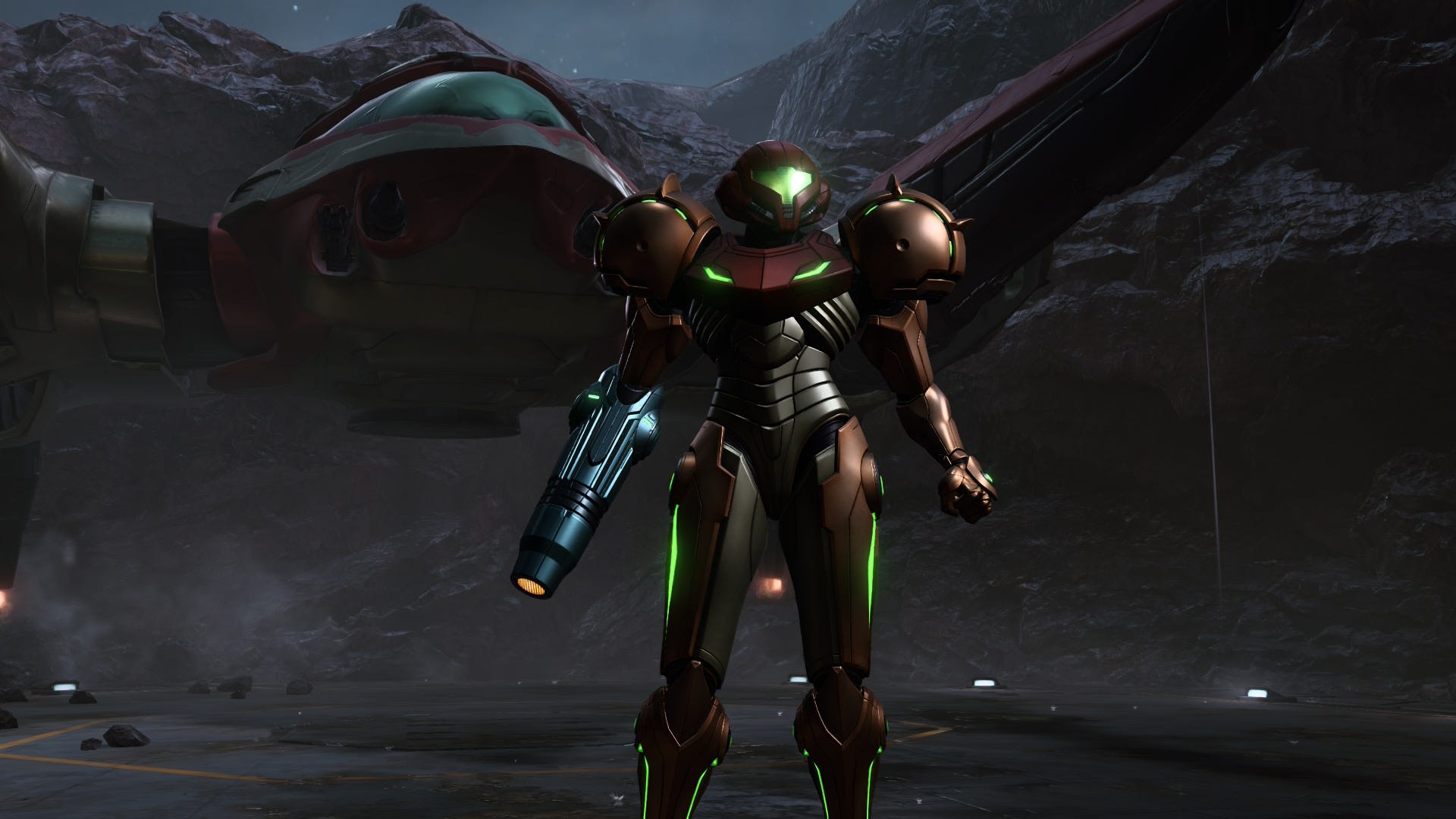
Beyond begins with Samus coming to the rescue of a Galactic Federation outpost under siege by Sylux, a mysterious bounty hunter from previous Prime titles with an axe to grind against Samus and the Feds, who is now commanding the Space Pirate forces. In the 18 years since the last Metroid Prime release nearly all of Retro Studios’ staff departed for other gigs, leaving many to wonder if this new entry would still feel like a true Prime joint. It’s immediately clear in the prologue mission that the new team played things pretty safe with Samus’ abilities in order to preserve the gameplay fans have come to expect — a good move considering the Prime series remains singular in its blend of first-person shooting and atmospheric exploration.
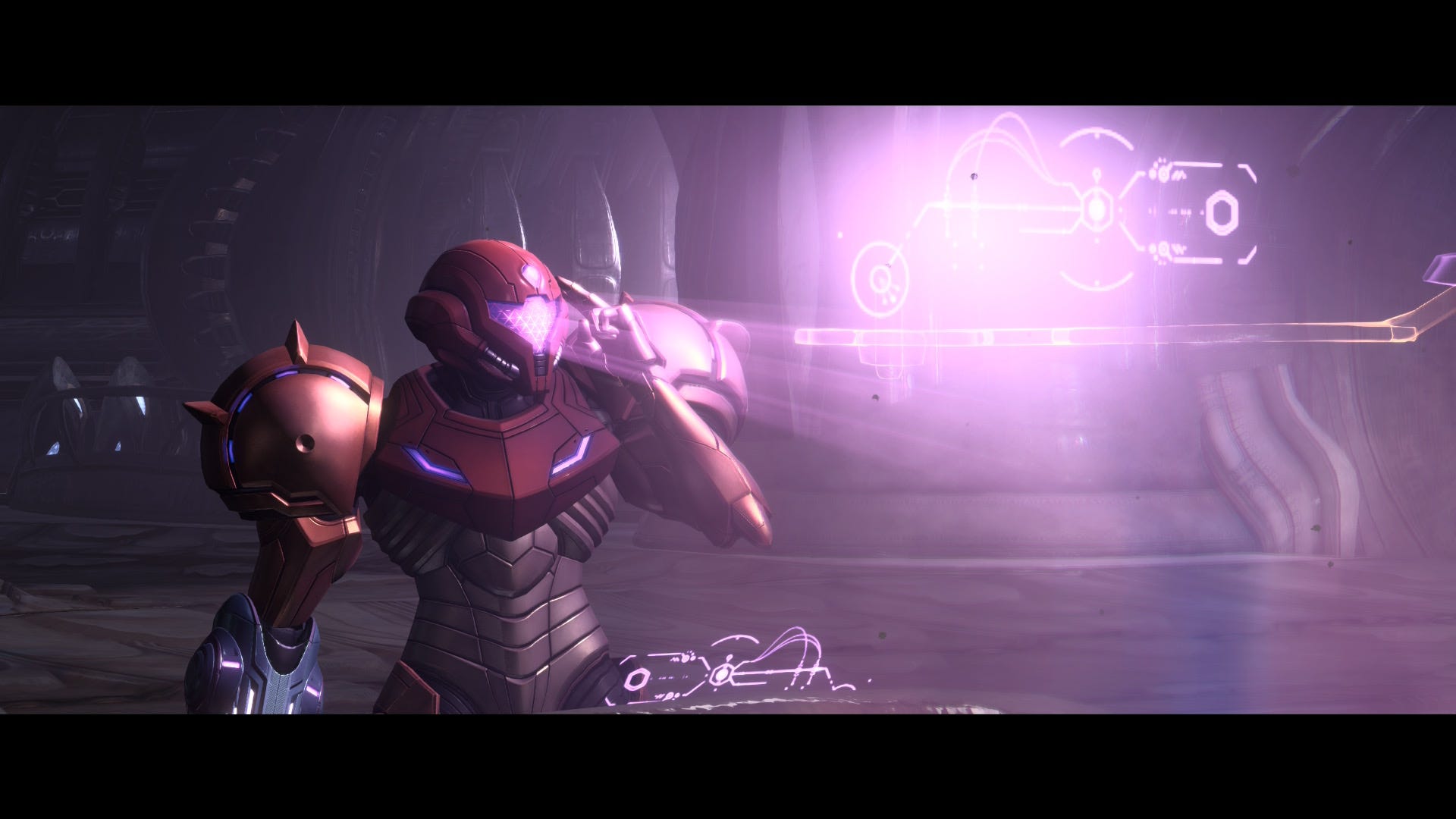
The scan visor remains the primary method of interfacing with the world and is functionally no different than before: download information that will help defeat enemies, proceed around environmental obstacles, and piece together the mystery of the ill-fated Lamorn people. Samus still locks on and shoots using some combination of the basic Power Beam, missiles, and special weapons; squeezes into tight spaces and rolls about in third-person while in Morph Ball; and uses grapple beam abilities to swing around and rip things off of other things (the latter of which is finally reclaimed from Corruption’s questionable use of motion controls). All of it feels well-designed, tightly executed, and fun to play — “more Metroid Prime” if you will, high praise given the original title’s legendary reputation. At the conclusion of the prologue, an accident with a strange piece of alien tech transports Samus to the faraway planet Viewros, where she is charged by the last vestiges of a dying alien race to transport the sum of their collective knowledge and wisdom off-planet, that they may live on after death.
The discovery of new abilities and how they change your interactions with the world is one of Metroid’s great joys. That’s certainly true here, and what Beyond brings to the table is generally welcome. A new wrinkle in the grapple system shows up often in traversal but is only meaningfully integrated into one combat encounter, and an added element to spider ball made for some late-game puzzle designs that are as good as any in the series’ history. However, the psychic abilities that were consistently advertised in trailers and demo footage never really rise above “use thing to open door,” confirming suspicions that they were primarily intended to shill for the mouse control capabilities of the Switch 2 Joy-Con. Although there are more psychic abilities than were initially shown, as a staunch twin-stick player engaging with these was a mostly rote exercise, inoffensive but unspectacular amidst a foundational system that still holds up decades after its inception.
More importantly, Beyond still feels like its predecessors. My first steps into Viewros in the Fury Green area ushered me back to peak Prime with a pulsing, ambient electronic soundtrack that created an impeccably moody atmosphere. Birds fly overhead as ants crawl along a downed tree trunk to avoid a violently thrashing plant, all of it scannable for entry in the logbook. Oh yeah…we’re so back. In a departure from previous entries the soundtrack is also dynamic, changing as the world evolves around Samus during repeat visits to different areas. After activating a generator and watching an entire area roar back to the active life it must have had at the peak of the Lamorn civilization, low drones and subtle beeps gave way to a pounding beat and soaring melody. Returning to areas after story events that often created radically different pathing made backtracking — another series staple — something to look forward to rather than Dread (pun enthusiastically intended).
Beyond also maintains the Prime series standard as the flagship titles for Nintendo console fidelity. On Switch 2 this is without a doubt the most graphically impressive game Nintendo has ever made. Every image you see here was captured on my Switch 2 and uploaded directly to the review — no edits needed. While Retro didn’t exactly break the creative bank in coming up with the game’s five primary areas (you’ve pretty much seen them all in previous Prime titles), they are nonetheless beautifully rendered and all work together to create what feels like a complete world. There is a quiet melancholy in learning more of the Lamorn’s history that feels right at home with the previous entries, made all the more sad as Samus brings their dormant industries to life in pursuit of her ultimate goals — a glimpse of what they once were and will never be again. It’s that kind of silent, observational world-building that engrossed players and made Prime such a singular hit, and I was pleased as punch to see that this iteration of Retro Studios still has this down pat.
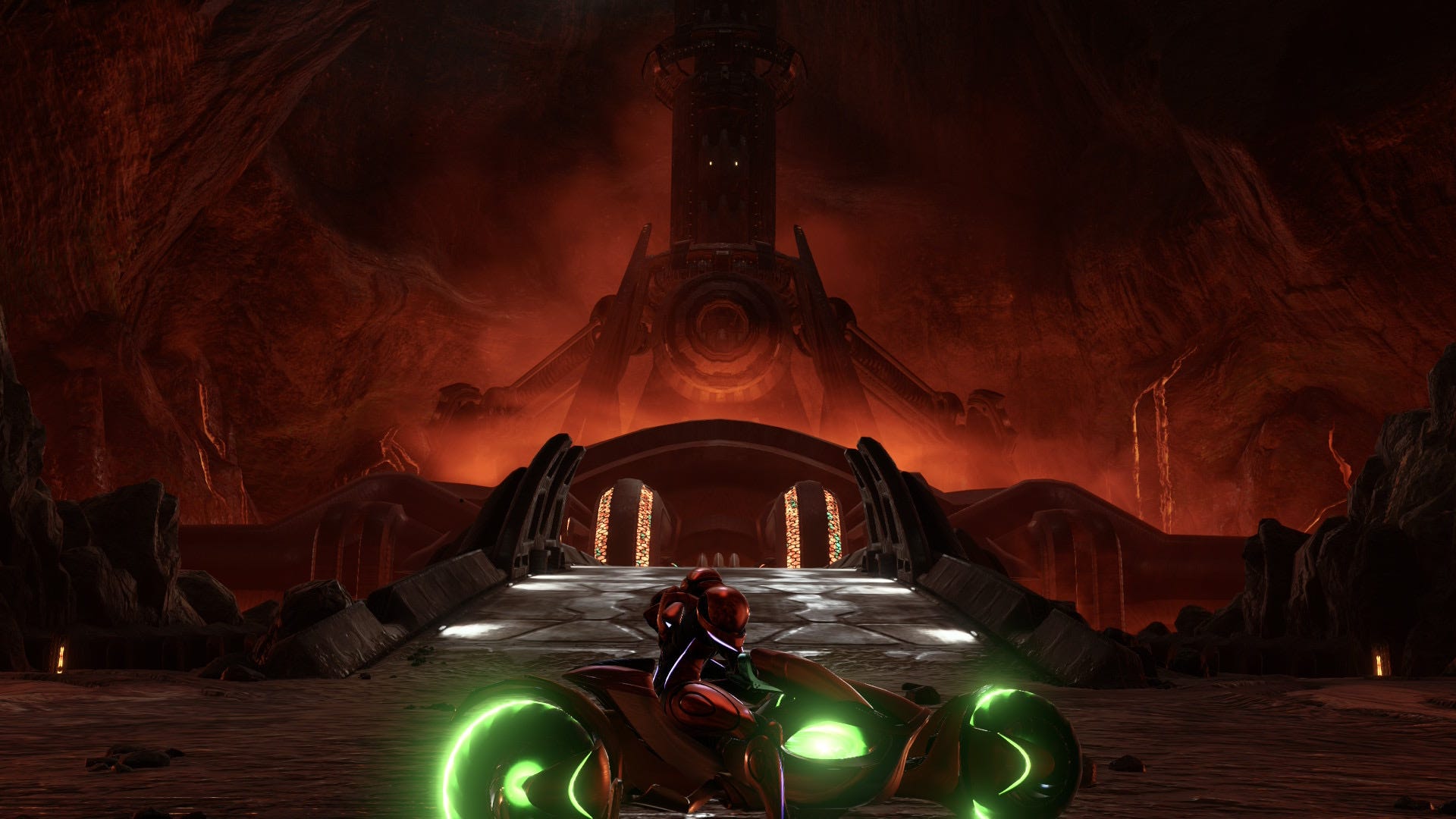
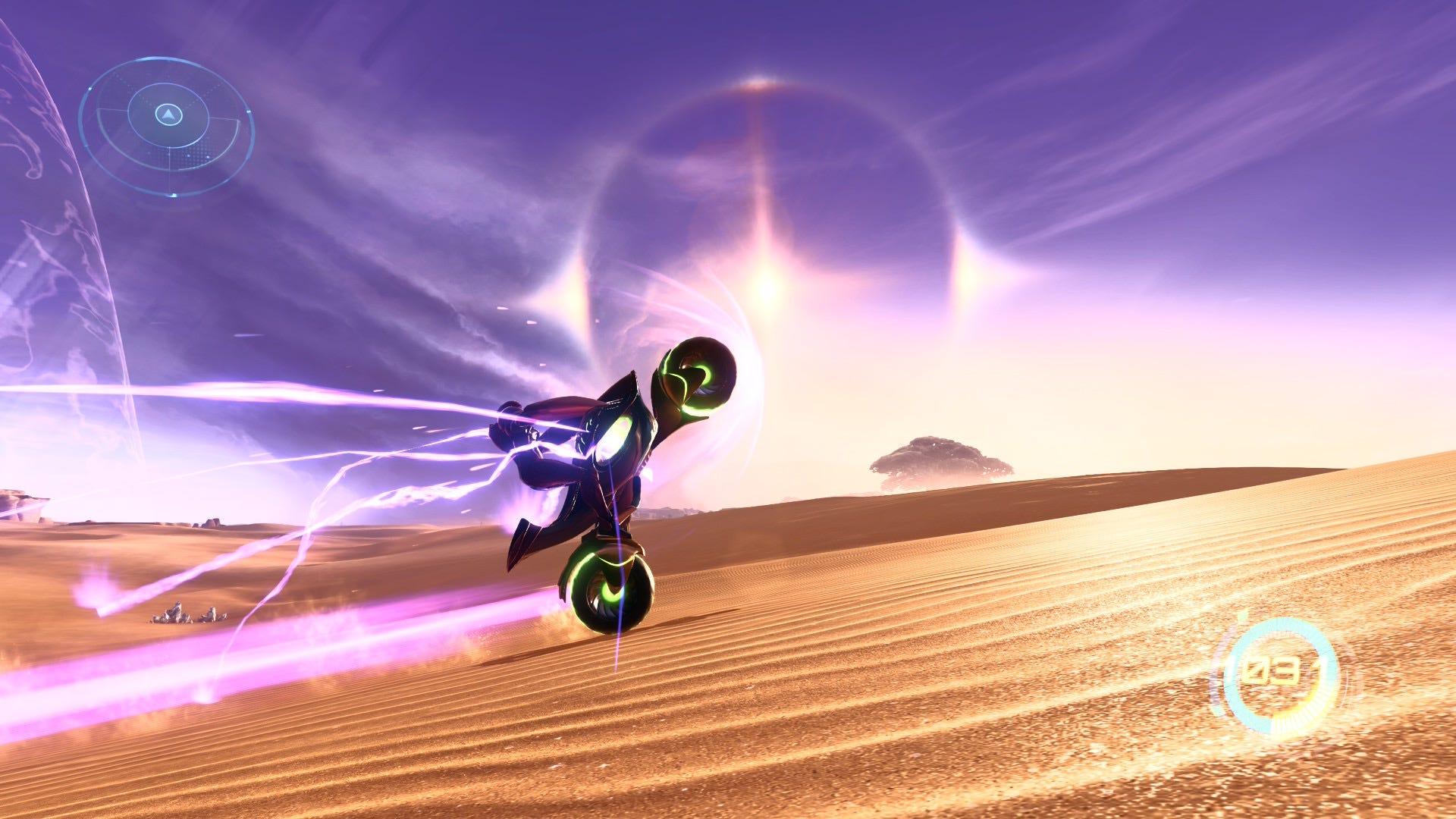
However, as was evident from the final round of previews, there were going to be some major departures from series norms. Perhaps most obviously, Samus was seen on a flashy motorcycle called Vi-O-La that she uses to traverse a vast desert area, Sol Valley — was Metroid going open-zone? The answer, like many of the big-picture questions swirling around this long-gestated title is…kinda? Sol Valley serves as a hub zone that allows access to each disparate region of Viewros by way of Vi-O-La. Zipping around the desert on my sick-ass motorcycle with a Dad rock-inspired music track blaring out of the amiibo-unlocked radio made point-to-point traversal enjoyable. And let’s be clear: no, Nintendo did not gate an area’s music behind an amiibo. It has its own theme that offers immaculate, lonely vibes and this is simply an optional extra.
The area falls comfortably ahead of Breath of the Wild on the “how much stuff is there to do in the open world” scale (thank god), but doesn’t exactly feel stuffed to the brim. There are six shrines to explore once you can unlock them with a corresponding ability, but they’re short, and quite a few expansions are there to be uncovered once you have the abilities to get to them. Mostly, it’s loaded with green crystals that you’re required to harvest for one of the game’s main objectives. This means that much of your time on the overworld is spent smashing rocks with a motorcycle, leading me to wonder if the green crystal collection quest was an afterthought to justify the choice to utilize a hub zone. If so, I’m not sure any amount of awesome big wheeling around in the desert would make No Man’s Sky-level crystal mining feel like the juice was worth the squeeze.
Significantly, this also comes at the sacrifice of one of the most important aspects of Metroid map design: interlocking areas that connect and conjoin in increasingly unlikely and surprising ways. This means each region of the map is fully sequestered from the others — each of them largely linear, isolated experiences unlike what players of 2D and 3D Metroid rightfully expect from the series. There is no discovery of new pathing between zones, no eye-widening moments of finding shortcuts with new abilities that dramatically reduce backtracking time. Don’t get me wrong, the design and presentation of these zones range from good to great, with some approaching excellence — this just doesn’t feel like a Metroid map, and that is a tough pill to swallow.
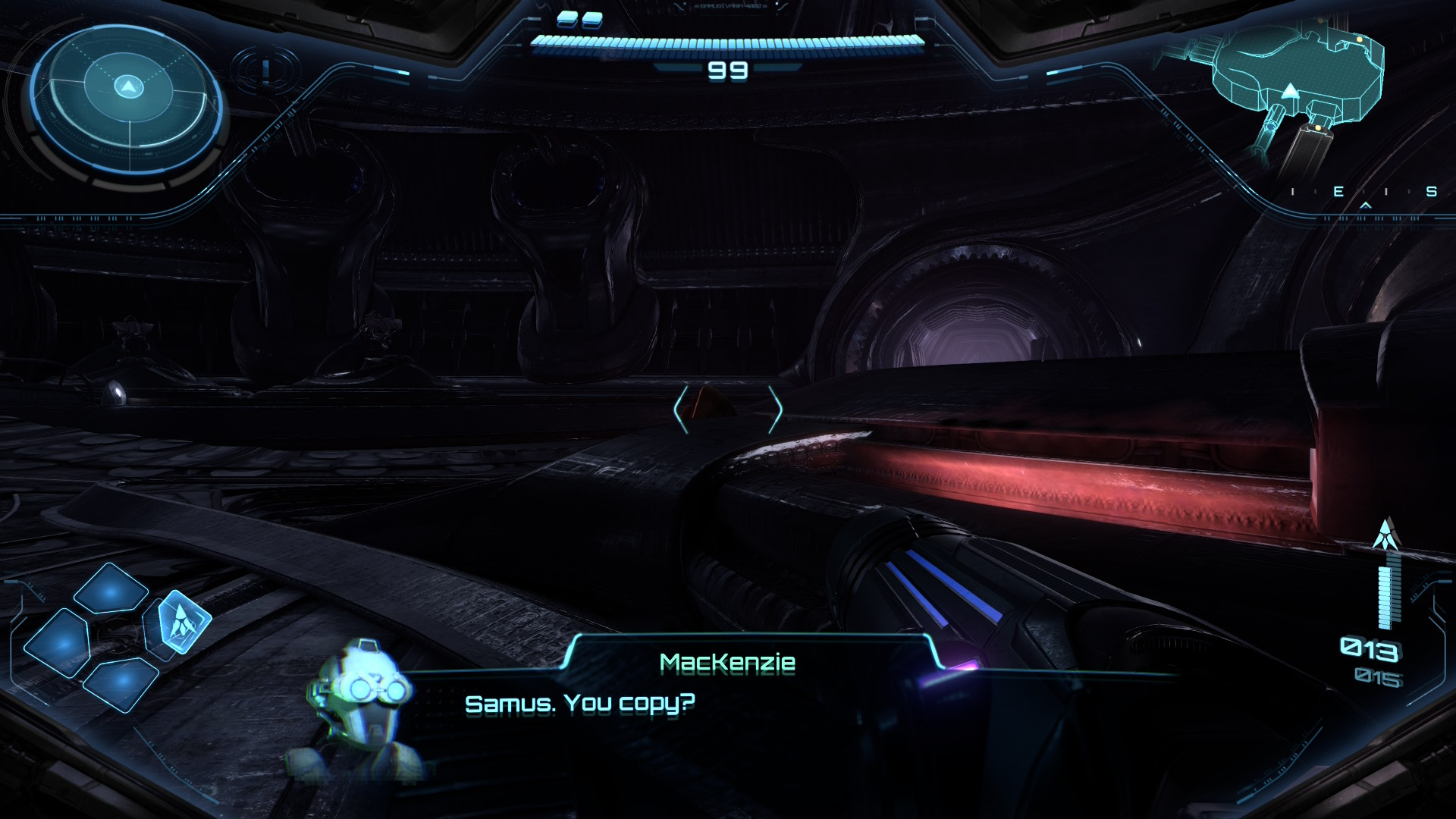
Another of the major changes: Miles Mackenzie, Galactic Federation Engineer, tags along for the journey after being rescued by Samus. In the preview footage Mackenzie never seemed to shut his trap, quipping about absolutely everything happening around Samus and offering brain-dead hints that would make even Mimir blush. Nintendo also confirmed pre-launch that there would be others like him to encounter along the journey. All of this gave series regulars pause, and rightfully so — would the inclusion of yappy Galactic Federation NPCs ruin the moody, isolated experience that Metroid games are known for? As with Sol Valley, it’s complicated.
What Mackenzie offers is basically just a voiced version of your suit’s computer from the original Metroid Prime, pointing you in the direction of the next major ability if your exploration didn’t organically guide you there. The execution is markedly different though, mostly to its detriment. His dialogue (and the game’s entire script) is pure cheese and will grate on anyone with an ounce of media literacy. These hints about what could be hiding in new areas and how to get there used to be vague and inspire curiosity. Now, they are as blindingly obvious as I have unfortunately come to expect from modern Nintendo: “Hey Samus, why don’t you go to (location X) and use (ability Y)? I bet you can find (new ability Z)!” complete with an on-screen prompt to open the map that cannot be removed without complying. Mackenzie keeps his gabbing to himself when the action shifts out of the hub zone, which means your backtracking through each zone will be blissfully lonely as befits a Metroid game. However, unlike all three games in the original series this hint feature cannot be turned off, which means tooling around the desert on Vi-O-La will be underscored with frequent and incredibly annoying pleas to head to certain areas. While the departure isn’t that dramatic functionally speaking it runs counter to the soul of what makes Metroid great: the mystery and wonder that come from encountering inscrutable obstacles that newly earned abilities eventually let you overcome.
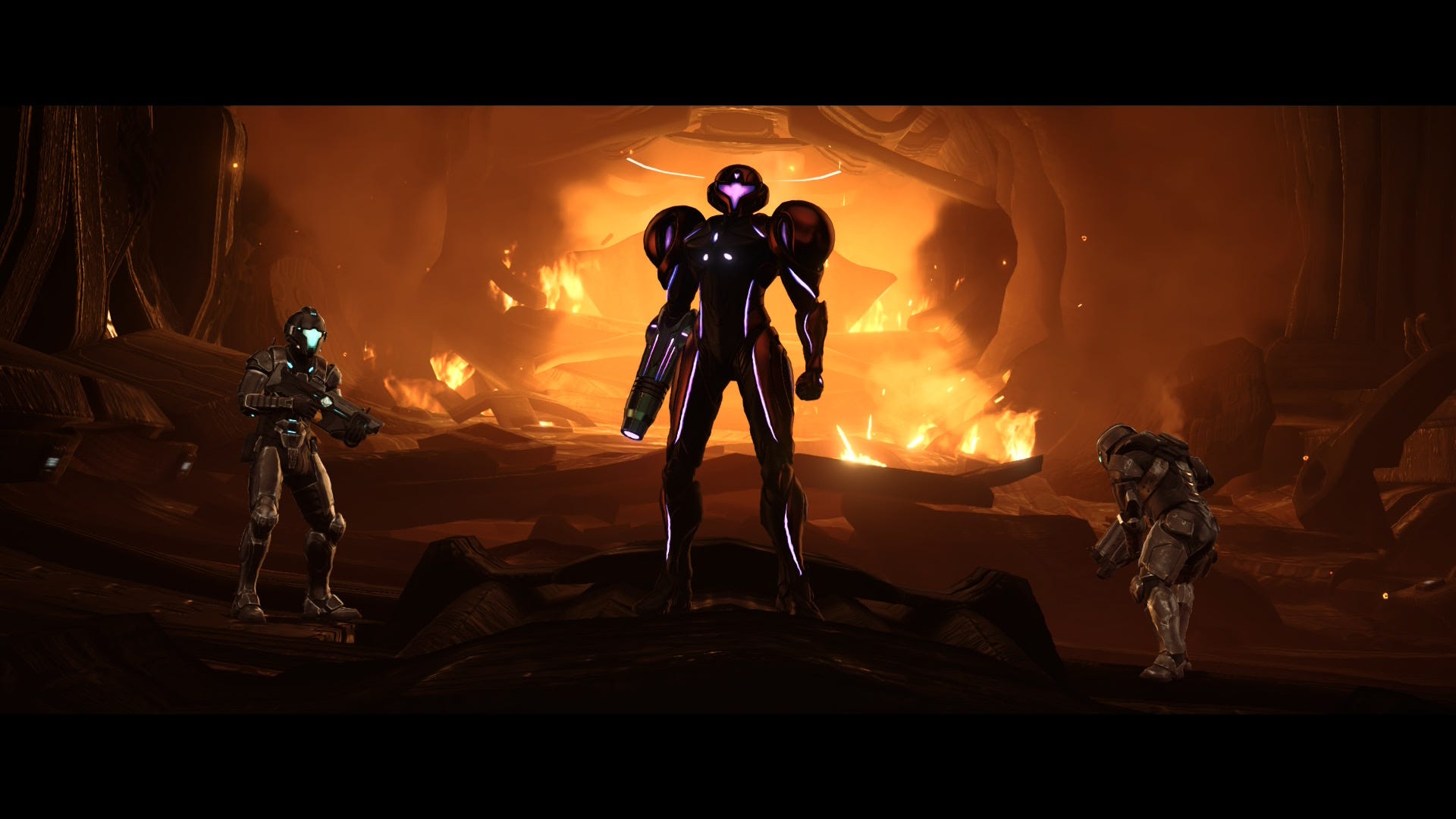
The rest of the crew of GF NPCs are as unfortunately tropey as Mackenzie, and just as uninteresting. The game really wants you to give a shit about them and will even send you to a game over screen if you allow any of them to die while under your charge. Those who wondered about “escort missions” after the final preview were indeed right to worry, but those sections are mercifully brief — with one notable exception that turned an absolute ripper of a boss fight into a massive bummer as I was forced to frequently break the flow of combat to revive my unwanted allies.
The only other named character is primary antagonist Sylux, who first appeared in Metroid Prime: Hunters on the Nintendo DS. A bounty hunter using modified Galactic Federation tech and holding a major grudge against Samus, he continued to pop up in cameo appearances in other Prime games, making his backstory and motivations for continuing to dog Samus the most significant loose ends in the series. Metroid Prime series producer Kensuke Tanabe spoke to IGN at E3 in 2015 and threw gasoline on the fire by explicitly confirming his importance to what was at that time a theoretical Prime 4:
“There’s still more I want to build around the story of Sylux and Samus. There’s something going on between them. I want to make a game that touches upon [it]. I’m also thinking that, in that eventual game between Sylux and Samus that might get made, that I want to involve the [Galactic] Federation as well.”
Between Tanabe’s words, Sylux’s existing lore, and the decision to feature him prominently in this game’s marketing, the table seemed to be set for a more narratively-driven Prime centered on his mysterious relationship with Samus and the Galactic Federation. Without spoiling anything for this barely week-old game, suffice it to say the table that was set was not utilized at the banquet of Beyond’s story. To be clear, Metroid doesn’t need plot to be successful and is often better without it (looking at you, Other M) but platforming Sylux is baffling given the product we received. Those not plugged into all things Metroid may not mind his relative lack of presence in the game, and might even respond to him positively as a mysterious antagonist working from the shadows. But if you know the history of this character and how he was trending for a major role in Beyond, you’re bound to be disappointed.
Coming out of the game’s penultimate area, one of the best in both game and series, I had high hopes that the finale could potentially stitch together these disparate pieces into something worthwhile. Unfortunately, I still couldn’t be bothered to care about these Galactic Federation NPCs and our absentee antagonist by game’s end. Together with a flaccid final “act,” they culminate in an ending that felt completely at odds with the design choice to foist these characters on us so insistently. It’s entirely possible Beyond is sequel-baiting (trilogy-baiting?) and I’m willing to suspend a certain amount of criticism until we know that for sure. But as currently constructed I ended with a bit of a sour taste in my mouth despite enjoying almost all of the preceding meal.
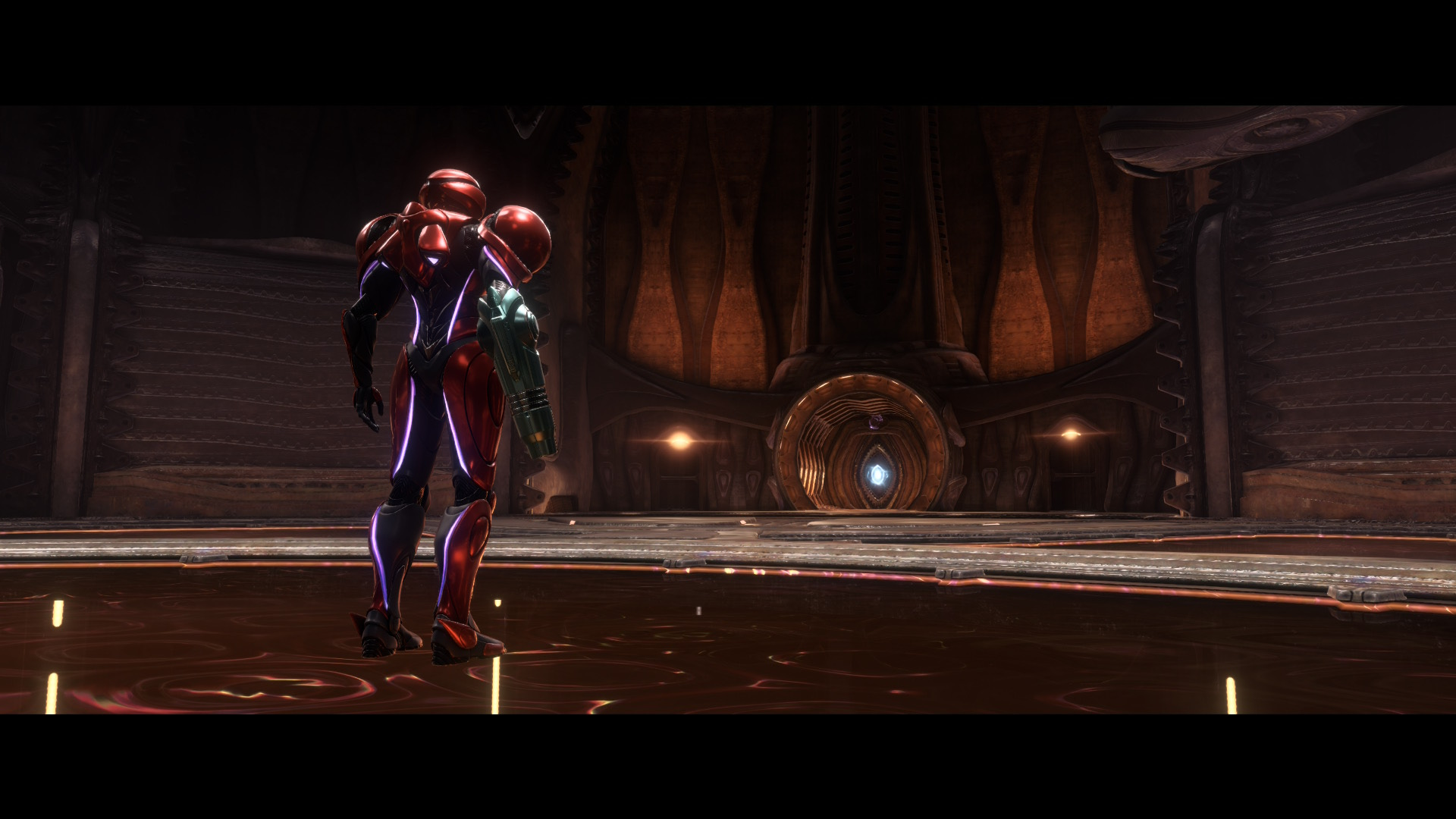
So…what are we left with? As a gamer, I’m well satisfied with Beyond. It’s gorgeous, controls well, and introduces a few meaningful new mechanics to the series that I hope to see again. As someone who lists the original Metroid Prime as his favorite game of all time — the title that launched a life-long love of Metroid and the genre it spawned — I vacillated between exhilarated, confused, and a little disappointed. I can best summarize my feelings through an adapted quote from Hamlet: “these but the trappings and the suits of Prime.” In other words, the signifiers of a great Metroid Prime game are there but feel superficially realized. It’s a pretty darn good game — but is it a Metroid Prime game? What does that even mean anymore if this is the direction the franchise is taking? While this title holds up well on its own merits, it leaves me with some huge existential questions about the series and its future, almost all of which would require major spoilers for the story, ending, and abilities not shown in previews. To address those questions and other matters that don’t fit neatly (or at all) within this space, I’m penning an opinion piece with full spoilers to serve as a companion to this review. When it’s complete it will be linked here, or you can find it on the homepage.
VERDICT
Metroid Prime 4: Beyond is an uneven and occasionally excellent title that confirms that the Metroid Prime sub-series will have a place in the roster of first-party Nintendo titles for years to come. Most new additions work, some don’t, and while the game’s ending may or may not feel complete someday through future titles or DLC, as currently constructed it feels hollow. Although I fear future titles won’t come in the shape or form that I’ve come to expect as a fan of the series, I nonetheless have to acknowledge that this one works in its own right while also hoping Metroid Prime 5 can reestablish some of what made the series great to begin with.