


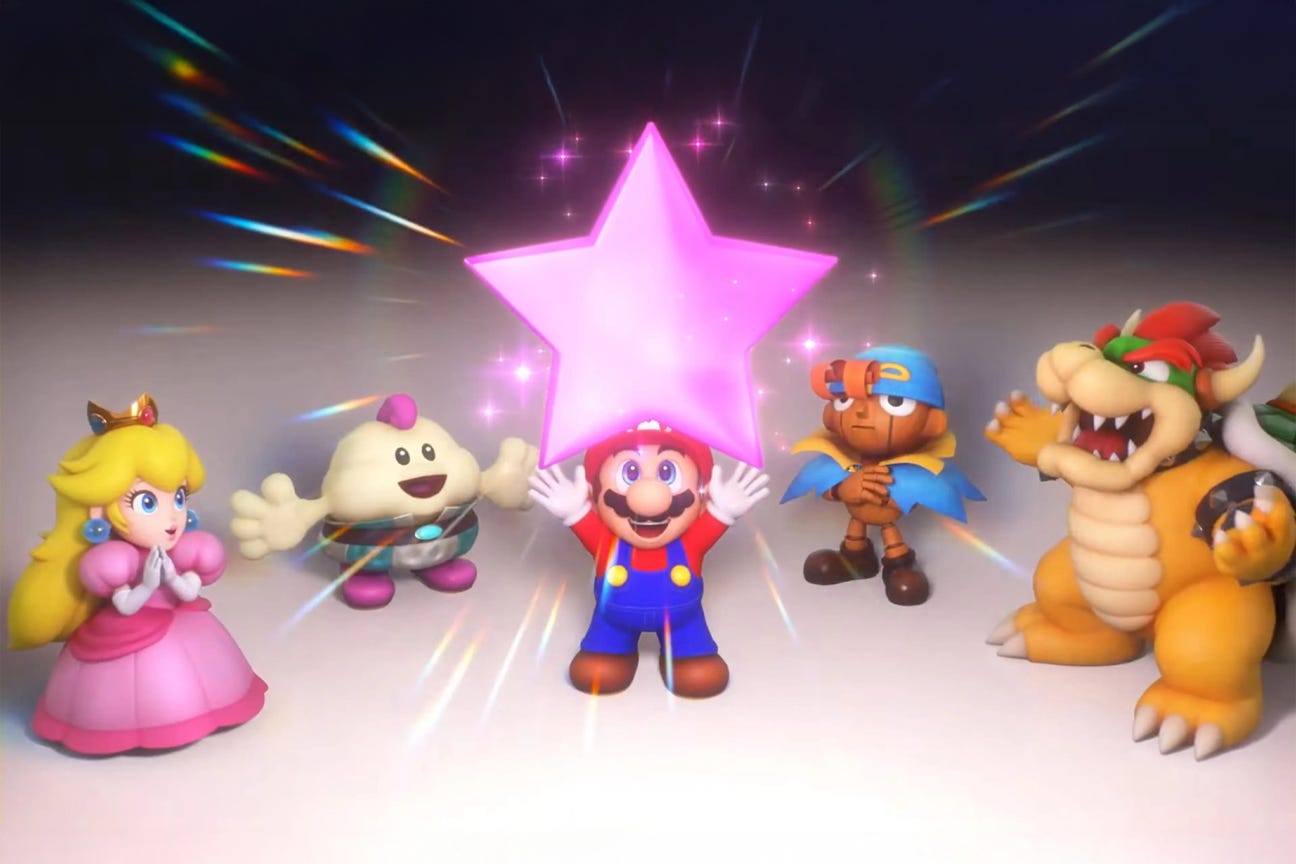
Super Mario RPG: Legend of the Seven Stars has long been something of a unicorn in both Nintendo and JRPG game spaces. Originally released for the SNES in 1996, this collaboration between Square and Nintendo was one of the Big N’s first attempts at allowing outside developers to handle their IP — something they are still notoriously cagey about even in the modern era. The resulting fusion of oddball Nintendo humor, turn-based combat, and original Square-designed characters was a JRPG that held its own amidst the genre’s early golden age, but between languishing on a since-shuttered online service and a boutique all-in-one console, it’s continued to remain a niche title. As an unapologetic Seven Stars stan (Geno in Smash when??) I have spent literal decades of my life extolling its virtues to anybody who would listen and fiercely defending its place on the hierarchy of Mario-led RPGs. After so many later iterations and improvements on the formula, Super Mario RPG Remake still shines bright as a capable and engaging adventure that makes up for a general lack of difficulty with a heaping helping of heart and humor.
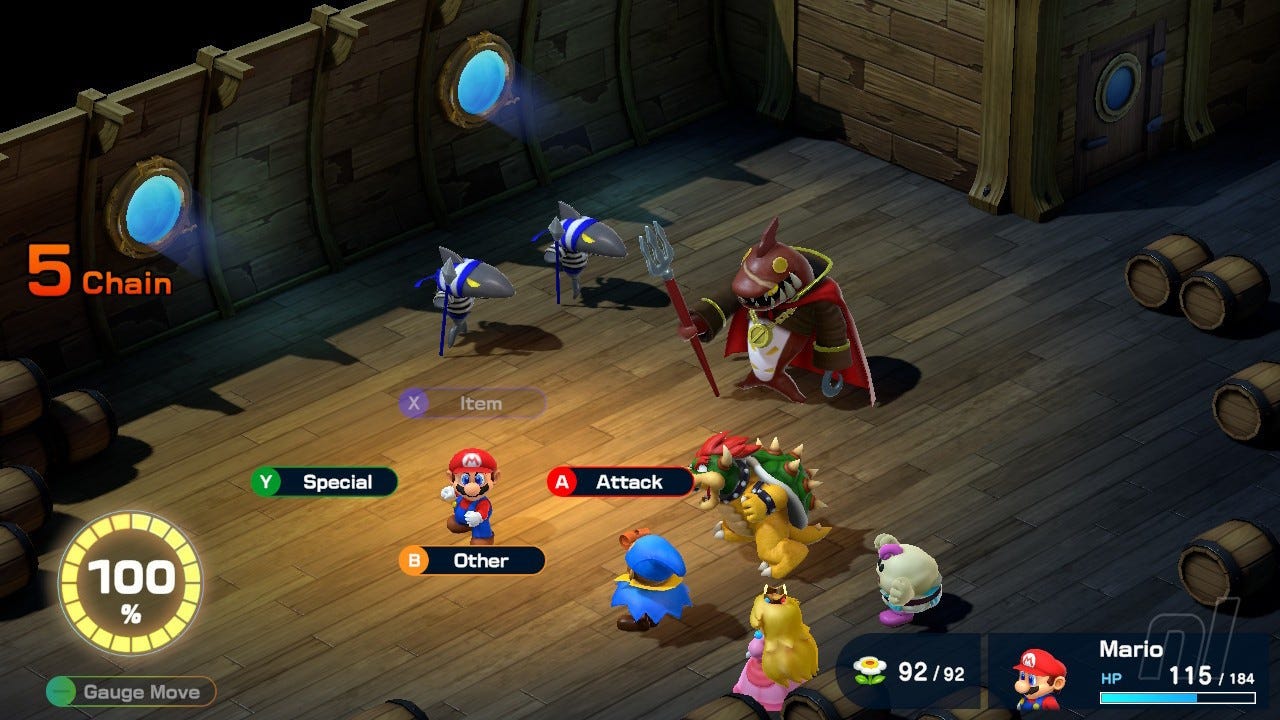
This was my first JRPG and Square game, both of which would go on to become staples of my gaming diet in the years to come. As such, this rendition of the Mushroom Kingdom’s sights and sounds are indelibly burned into my brain, and I was a bit concerned that a ground-up remake would water down the unique aesthetic and quirky vibes that I love so much. Mercifully, the gorgeous revisions to the game’s graphical capabilities bring its overall presentation sharply into the modern era while preserving the look of my beloved stubby Mario, his kooky companions, and the colorful cast of cranky cads they face off against while collecting the eponymous seven stars. Yoko Shimamura has revised her original soundtrack with both simple reorchestrations and substantial expansions alike that make each of its many earworms feel more musically complete. The emotional highs of revisiting a childhood favorite with such a fresh, vibrant coat of paint cannot be understated: I often found myself setting down my controller and jamming out to the happy brass blasts of the battle track, the mesmerizing melodies of Forest Maze, and twinkling tones of Geno’s theme. In a word: this version of the Mushroom Kingdom has never looked or sounded better.
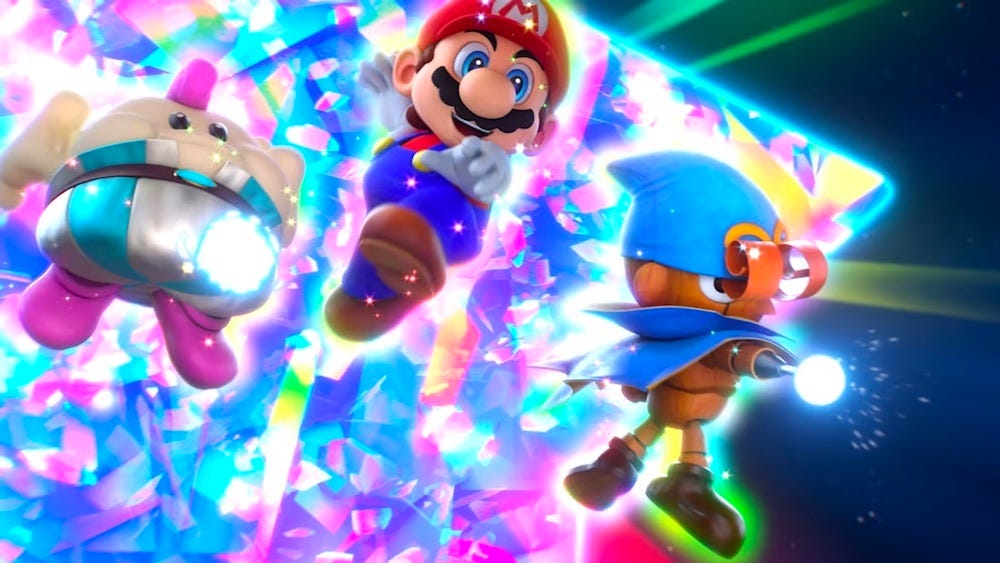
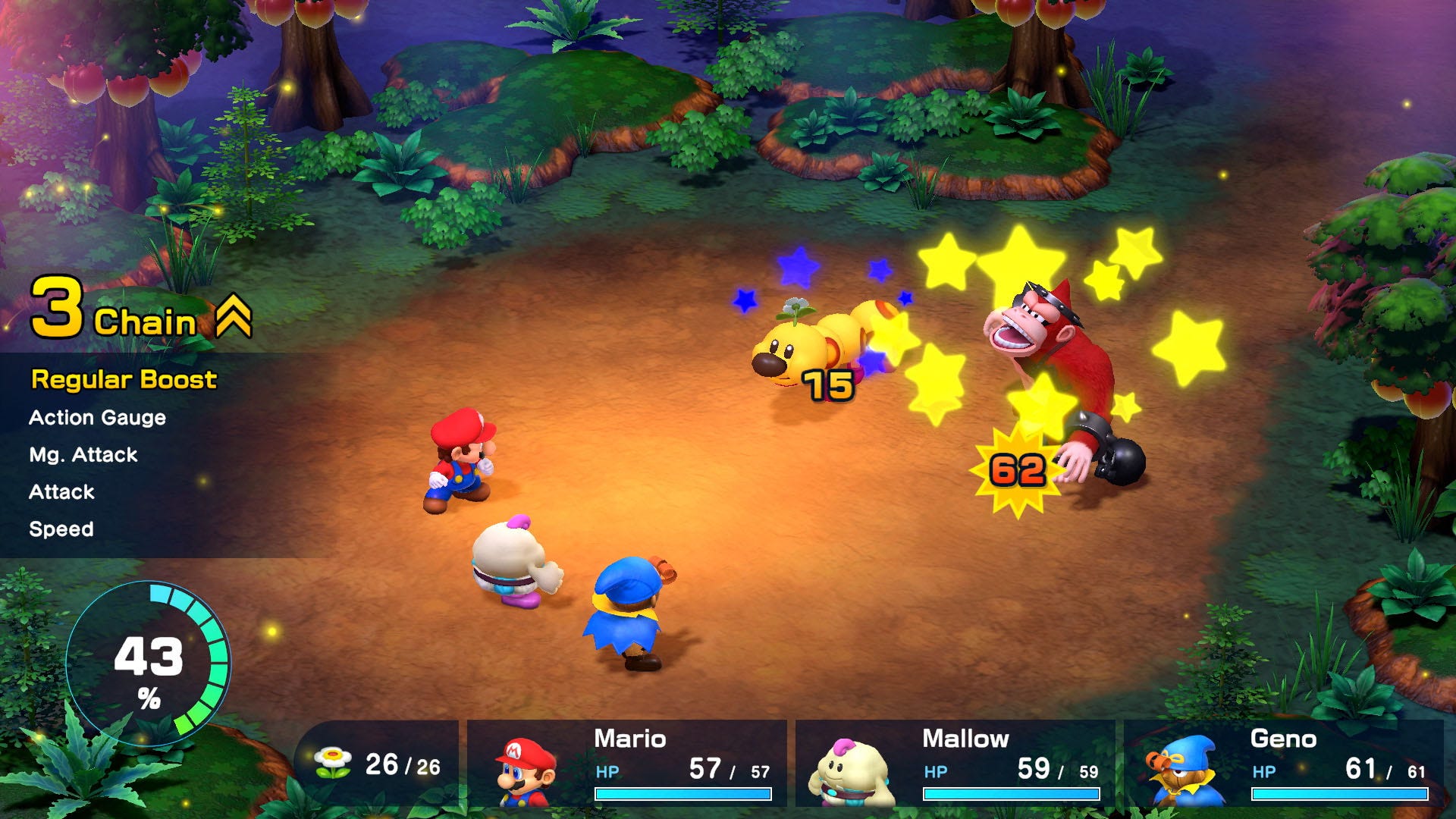
Despite the fact that subsequent RPGs featuring the plumber in red, such as Paper Mario and Mario & Luigi Superstar Saga, built their systems on the back of much of what Super Mario RPG offered, the game is rarely credited for its pioneering influence. A badge system that will feel familiar to Paper Mario series players is present, and while it will feel primitive in comparison to the more robust options available in those titles it does provide options for the player to (somewhat) customize each party member’s play style. Upon entering battle for the first time, more foundational DNA will immediately be apparent: pressing the attack button with good timing will result in a second hit; doing so on defense will reduce incoming damage. The timing window is more generous than other subsequent titles, but the remake includes an additional, even more precise window that hits every on-screen enemy or completely negates all incoming damage. This somehow adds and reduces difficulty simultaneously — the second window is genuinely tricky to hit consistently, but trivializes combat almost to the level of pointlessness once all enemy damage is negated and every character is a full-screen damage-dealing god. This balance (or lack thereof) between quality of life and making the game accessible for first-time players was frequently notable during my playthrough, although it wasn’t enough to diminish the happy vibes and good times I was having. I can understand that others who are looking for a meatier JRPG may not find enough on the bone to be sated, but what is there is delicious and memorable.
Another key balance that teetered over the line in both directions was that between faithfulness and stubbornness — at what point does remaining true to the original result in a frustrating experience that doesn’t hold up when placed alongside its contemporary counterparts? The stumpy character models, beautiful soundtrack, and bizarre humor are where the faithfulness of this remake is at its strongest. Mario pantomimes the saga thus far to the Toad Chancellor, who completely misunderstands, causing our hero to faceplant in exasperation. Later, after lovable crybaby Mallow fails to put two and two together about the truth of his heritage, the entire party faceplants in a hilarious payoff to a joke that has now spanned the length of the entire game. Frenemies like Booster go whole hog with half-baked plans in spite of their complete incompetence in ways that you can’t help but chuckle at. There’s even a famous kiss opportunity that sees Mario get a well-deserved smooch from his lady love Princess Peach — or smacks on both cheeks from Bowser and the aforementioned Booster. Once again we see the groundwork being laid for future RPG outings: this game walked so Superstar Saga and its wackadoodle characters could run.
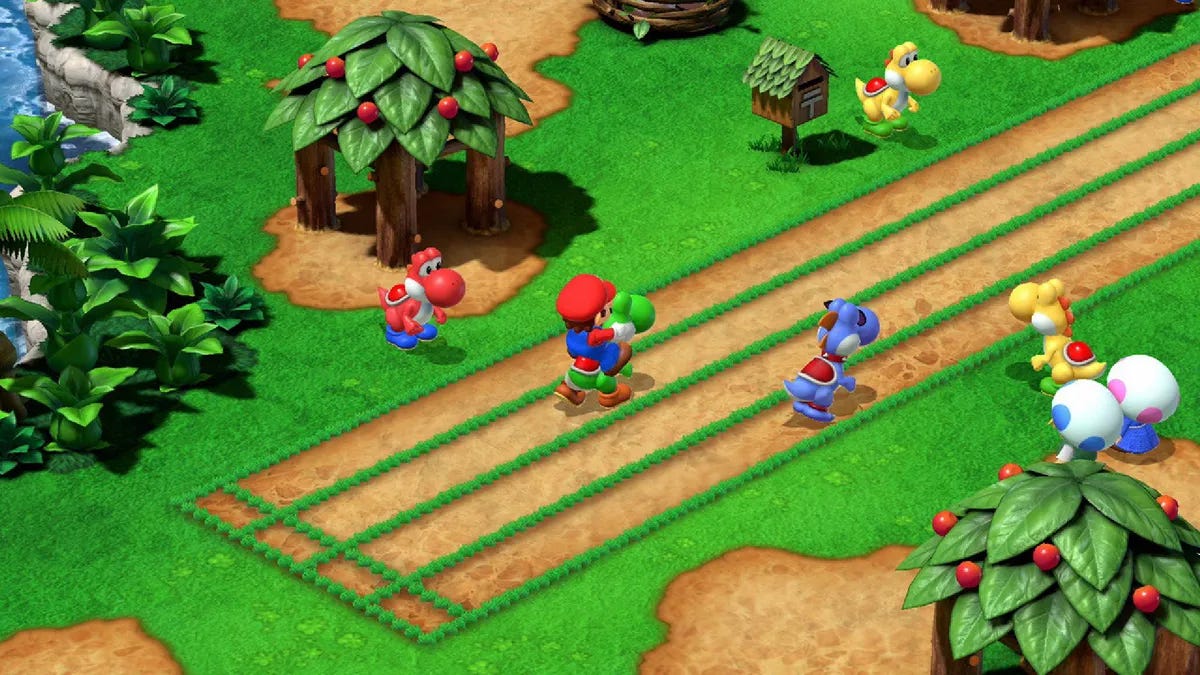
On the other side of the faithfulness coin, we have the title’s many mini-games. While some staples such as the Midas River course have never been smoother, or Mario’s barrel-running and leaping over fish more responsive, others are just as irritating as they were on 16-bit hardware (looking at you, Moleville minecart). Some manage to actually get worse — whacking goombas in the Pipe Vaults is infuriatingly imprecise, and the timing for the Yo’ster Isle racing game’s button presses are visible for the first time but, mystifyingly, are not synced to the beat of the music. The muscle memory from my most recent playthrough on a physical cart carried me through just fine, but other Console Crusaders had to practically shut off their sound in order to break the cognitive dissonance that descended upon them as their eyes and ears went to war with each other.
The largest improvement this remake has to offer comes in the form of new post-game content. The original title included an optional fight against martial arts master Jinx and a secret endgame boss behind the locked door in Monstro Town, and both of these remain, but neither can be said to be particularly hard unless weighed against the rest of the game’s breezy nature. This time, after credits roll a new quest becomes available that pits the party against souped-up versions of former foes. Some of these fights are genuinely very difficult: Punchinello nearly wiped me out until I figured out the conceit for the fight in the eleventh hour, Johnny “LET ME SOLO HIM” Jones returns with a no-items rematch that got my blood pumping, and Jinx throws tiny hands by countering with an instant-kill move every time you fail to hit the perfect timing window on an attack. And yes, if you’re wondering — behind the door in Monstro Town lies another, substantially more difficult climactic battle that takes things to a higher level befitting a true SquareEnix endgame. Once I had scraped my jaw off the floor, I found myself grinning from ear to ear at this final cherry on top of an already extremely enjoyable experience.
I will admit, I can hardly be considered impartial when it comes to this game. It will come as no surprise, then, that I do feel that the overall quality of this remake is very solid — it looks and sounds beautiful, is charming as hell, and runs pretty darn well (a few issues in the Monster List notwithstanding). While many feel it does not quite reach the lofty heights that its progeny would one day ascend to — there are certainly some areas that The Thousand Year Door, for example, is simply unmatched in — I would strongly argue that in many ways this not only holds its own against the field but beats it outright. This caring, competent remake firmly establishes this title as one worthy of your love and attention, and fans of Mario and JRPGs alike should take advantage of this long-awaited opportunity to play this game on modern hardware.
Verdict
Super Mario RPG brings an oft-overlooked classic into the modern era for a new generation of players to experience. The lack of difficulty and sometimes frustrating mini-games can be a turn off, but the charming visuals, reorchestrated and expanded soundtrack, and funky world are more than enough to make up for the warts. This is the faithful remake fans have been clamoring for for decades — largely for better, rarely for worse.

🥰