In a year that seemed destined for a letdown following 2023’s bumper crop of generational outings, Final Fantasy VII: Rebirth was easily my most anticipated game of 2024. Its predecessor Final Fantasy VII: Remake was my personal Game of the Year in 2020 due to the depth and breadth the development team was able to extract from a relatively short section of the original Final Fantasy VII. These characters that exist so vividly in the collective memory of millennial gamers had never been more achingly human and fully fleshed out, these locations never rendered with such loving detail, and the ending of Remake seemed to set the stage for something grand and unknown. I am pleased to report that Final Fantasy VII: Rebirth delivers across the board as an improvement to the already-great Remake, featuring scintillating combat, a beautiful open world with secrets around every corner, powerful pathos, and some of the most interesting and challenging optional content that the series has seen since the Ruby and Emerald Weapons tormented PlayStation players back in the 90s. Truly, this is the promise of Final Fantasy VII made gloriously whole.
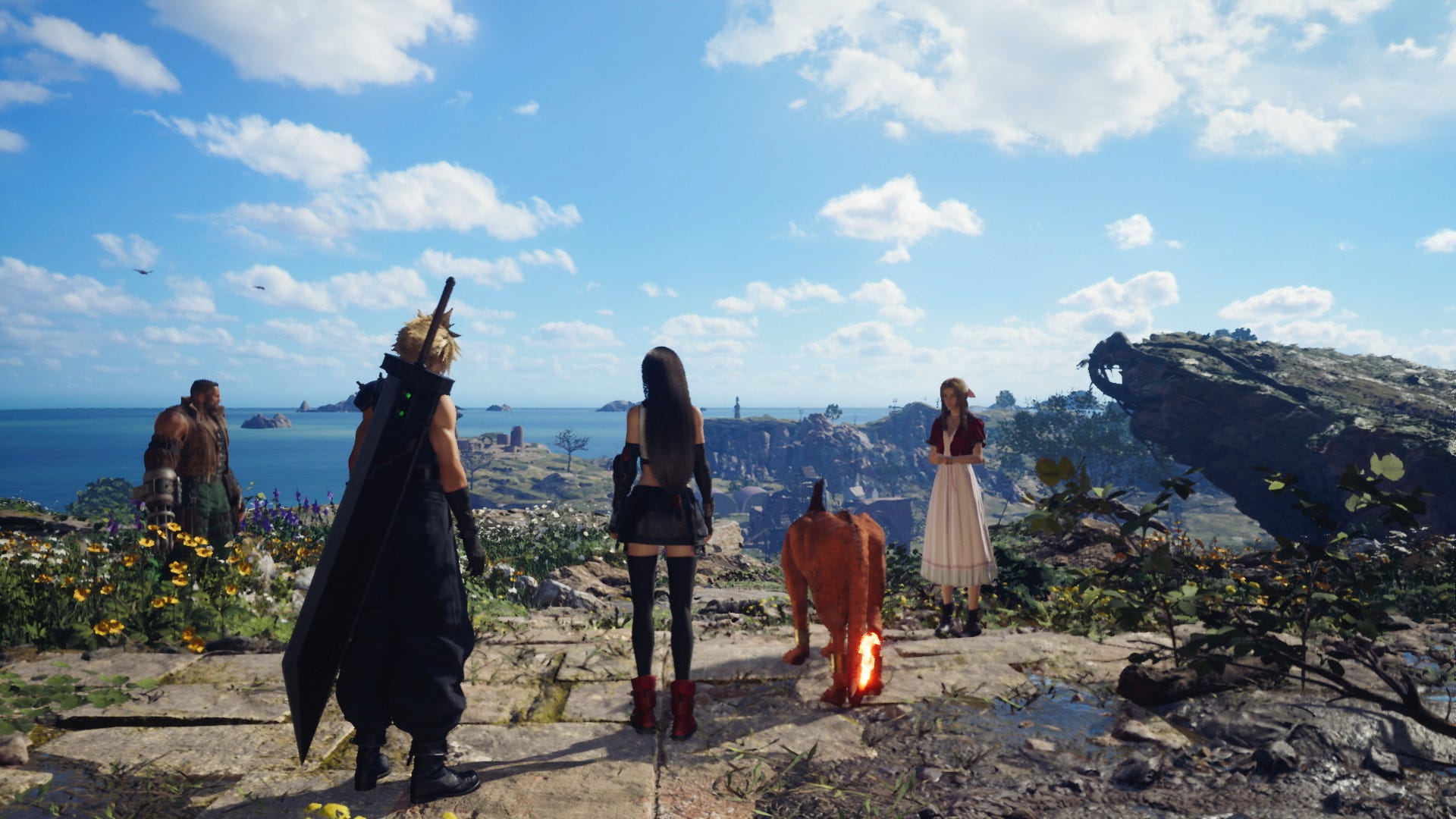
The second installment in SquareEnix’s Final Fantasy VII Remake trilogy is their most ambitious outing in the modern era, and stands in stark tonal contrast to both Remake and last year’s Final Fantasy XVI. Gone are the dark palettes and restrictive pathways of Midgar—and the grim-dark Game of Thrones-esque Valisthea, which seemed to be perpetually covered in a gray diffusion filter—and here now is a colorful, breathtaking open world that pushes the graphical and processing capabilities of the PlayStation 5 to their outer edges. The game wastes no time in opening itself up to players: after a brief prologue—the famous Nibelheim flashback at the Kalm Inn—the party is shuttled out of the city and into the Grasslands with its scenic hills, sea-side cliff vistas, and rich meadows. The world design in Rebirth never fails to disappoint and each area brings a unique traversal component to engage with (realized with region-specific breeds of Chocobo, a nice nod to the original title’s breeding mini-game). From the mountains of Junon, to the deserts of Corel, to the jungles of Gongaga, each region is constructed with loving care and collectively makes up perhaps the most fleshed-out world that this company has ever created.
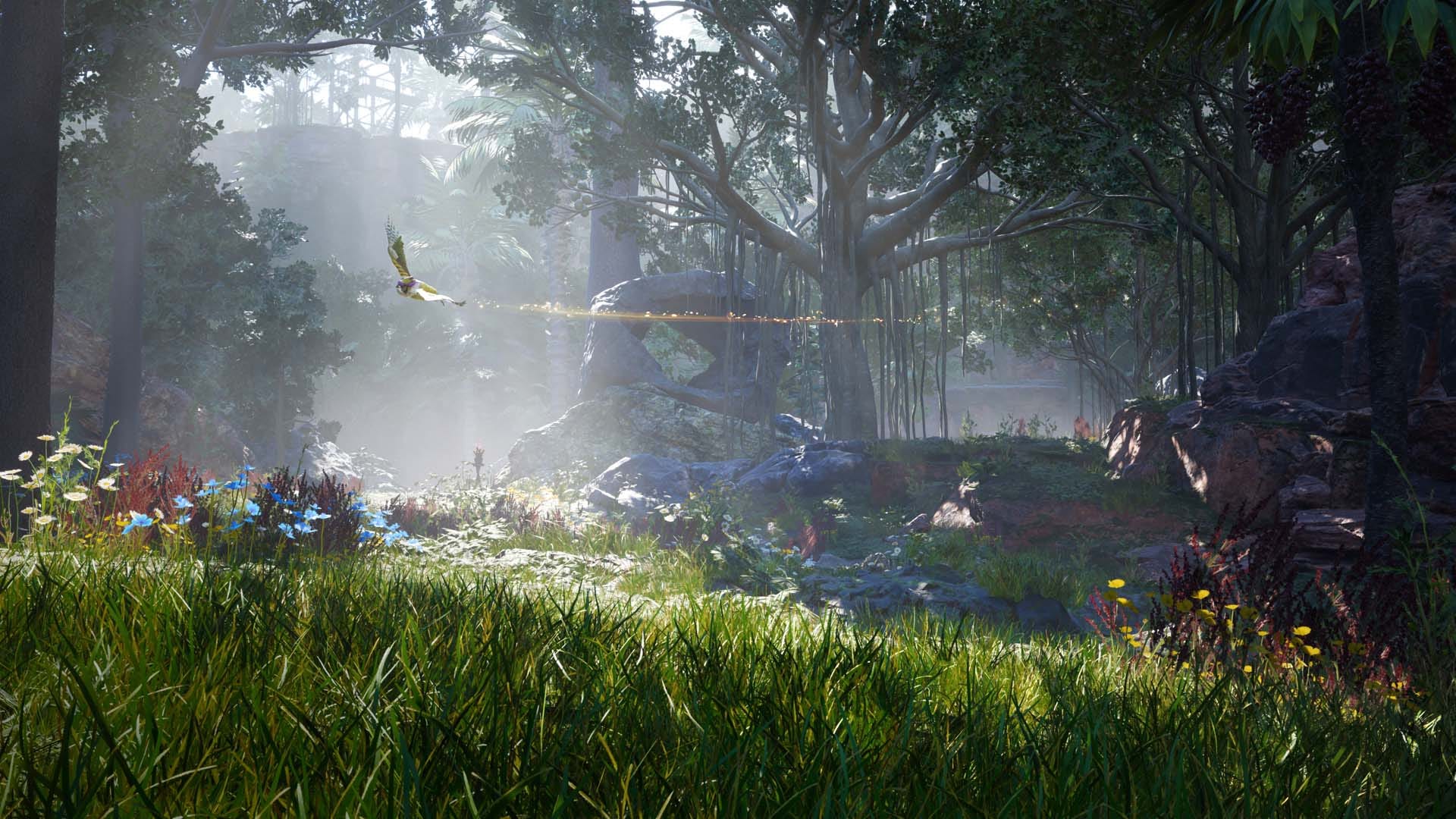
As far as open-world quest design goes, this doesn’t bring much new to the table. Fans of the early Assassin’s Creed games will recognize the tried-and-true “pop a vantage point to reveal quest markers” formula, this time taking the form of RemnaWave towers that irrepressible Shinra android Chadley uses to highlight points of interest. Depending on the degree to which a player wishes to make their own discoveries, this system can either be helpful and unobtrusive or gratingly obnoxious; for my money, it’s a solid and inoffensive take on this mechanic that never left me feeling overwhelmed or patronized. I liked seeing the list of new interest points grow as I methodically moved from tower to tower, clearing map fog and watching the world unfurl itself before me. Whether hunting rare monsters, chasing strange extradimensional Protorelics, or piecing together information about the history of the surrounding area, completing these optional side activities was always rewarding and only very rarely felt like a box to be checked.
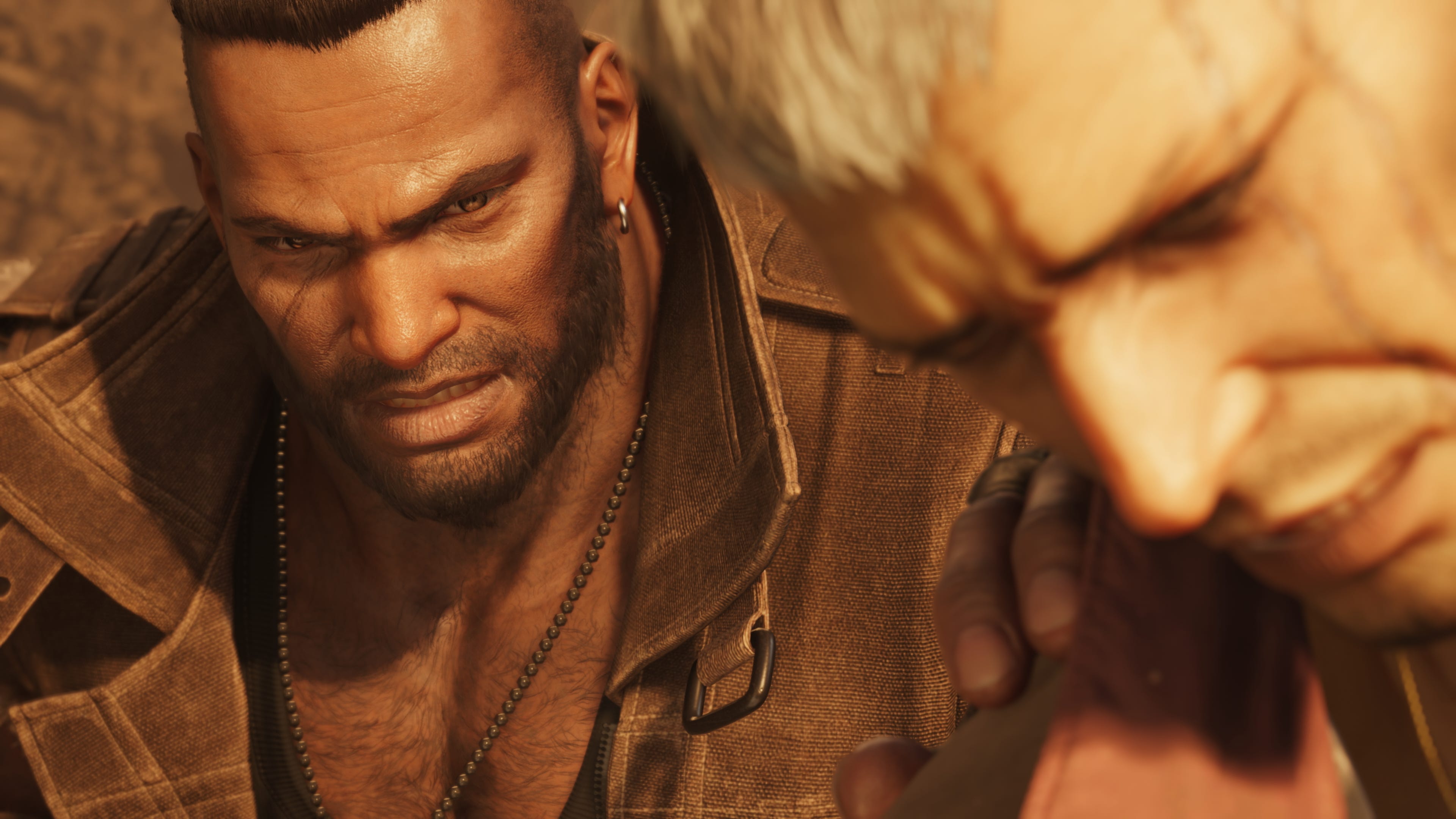
The greatest strength of the quest design lies in its deep ties to the new Affinity System, an expansion of the hidden value in the original FF7 that would dictate Cloud’s date during the famous Gold Saucer sequence. Every side quest is tied to a specific party member and will result in a boost to their affinity with Cloud, which is now visible at the press of a button. In addition to completing side quests, this value can also rise and fall based on conversational choices, synergy skills executed in battle, and other incidental items (such as matching Cloud’s taste in swimwear to that of one of his many romantic interests). The solid writing and capable performances by the core English language cast brought an even greater humanity to characters that, while rich in our imagination, were once only crudely-translated sketches, and introduced us to sides of each character that were never previously explored. For example, an early quest to help out a down-on-his-luck bartender became a chance for Tifa to process the destruction of her bar, Seventh Heaven, and to dream about what life will be like once the planet has been liberated from Shinra’s oppressive control. The dynamics of this group, and what endears each person to the notoriously brooding Cloud, have never been clearer—or more fun. Their banter is excellent and believable, with quick quips and well-timed deliveries of jokes at each other’s expense that frequently made me chuckle aloud. Of particular note is John Bentley’s performance as Barrett, which carried moments of such sorrow, longing, and introspection that I began to see the character as heartbreakingly three-dimensional for the first time in its nearly thirty years of existence.
Combat takes a quantum leap forward, addressing pretty much every gripe I had with Remake. Core elements like the stagger gauge, slowing time to select character abilities, and assessing enemies are all still present—and essential. Now, Cloud has the ability to attack from range, something that was sorely missing from Remake and created occasionally frustrating battles in which I had no choice but to switch to Barrett or Aerith and their less intuitive control schemes. Every character is also now capable of parrying without equipping a specific materia, which makes every combat encounter an opportunity to learn and then exploit the enemy’s attack patterns no matter which of the game’s colorful cast you prefer to control during battles. A myriad of materia have been added to allow for automating non-controlled party member’s skills, spells, and abilities, making it easier than ever to feel control of your overall battle approach without having to stop the flow of combat to micromanage every ATB charge. Synergy abilities are far and away the best new addition, though: after utilizing a certain number of ATB charges in battle, specific pairs of party members can execute these powerful abilities to deal massive damage and also unleash useful secondary effects, such as extending enemy stagger windows, raising limit break levels, and even granting temporarily unlimited MP. These abilities were essential for dealing with higher-level bosses, especially in optional content like each region’s summon materia battle and the conclusion of certain side quests. Without spoiling anything: long-time fans of the Final Fantasy series will be very satisfied with a best-in-series-tier optional endgame fight against a familiar foe once the Protorelic quest line is completed. Buckle up for this one, folks.
Although my 108-hour playthrough was largely enjoyable, there were a few less-than-stellar aspects that bear mentioning. The change in traversal options from region to region kept things fresh, but the Gongaga jungle in particular was chock full of one-way pathing that made exploration maddeningly repetitive as I struggled to make sense of which oversized mushroom went to which distant plateau. As fast-paced and frenetic as the combat was, the designers seemed more than willing to grind the pace of play to a halt at arbitrary moments. Rising from a rest on one of the game’s numerous benches always results in a ponderously slow standing animation that prevents me from accessing the menu until Cloud has dusted off his pants, re-sheathed his sword, and filed his most recent year’s taxes. If you’re unfortunate enough to press the menu button before he’s good and ready, you’re treated to a pause screen that adds even more time until you can fiddle with your equipment or battle settings. This forced slowness remerges in a number of other moments, including forced walking/crawling/staggering forward during the Nibelheim flashback that was much memed after the demo (not the only time this would be forced upon me, either). Slamming on the brakes this often for no conceivable reason is a bafflingly old-school design choice for a game that is otherwise all about modern quality of life features.
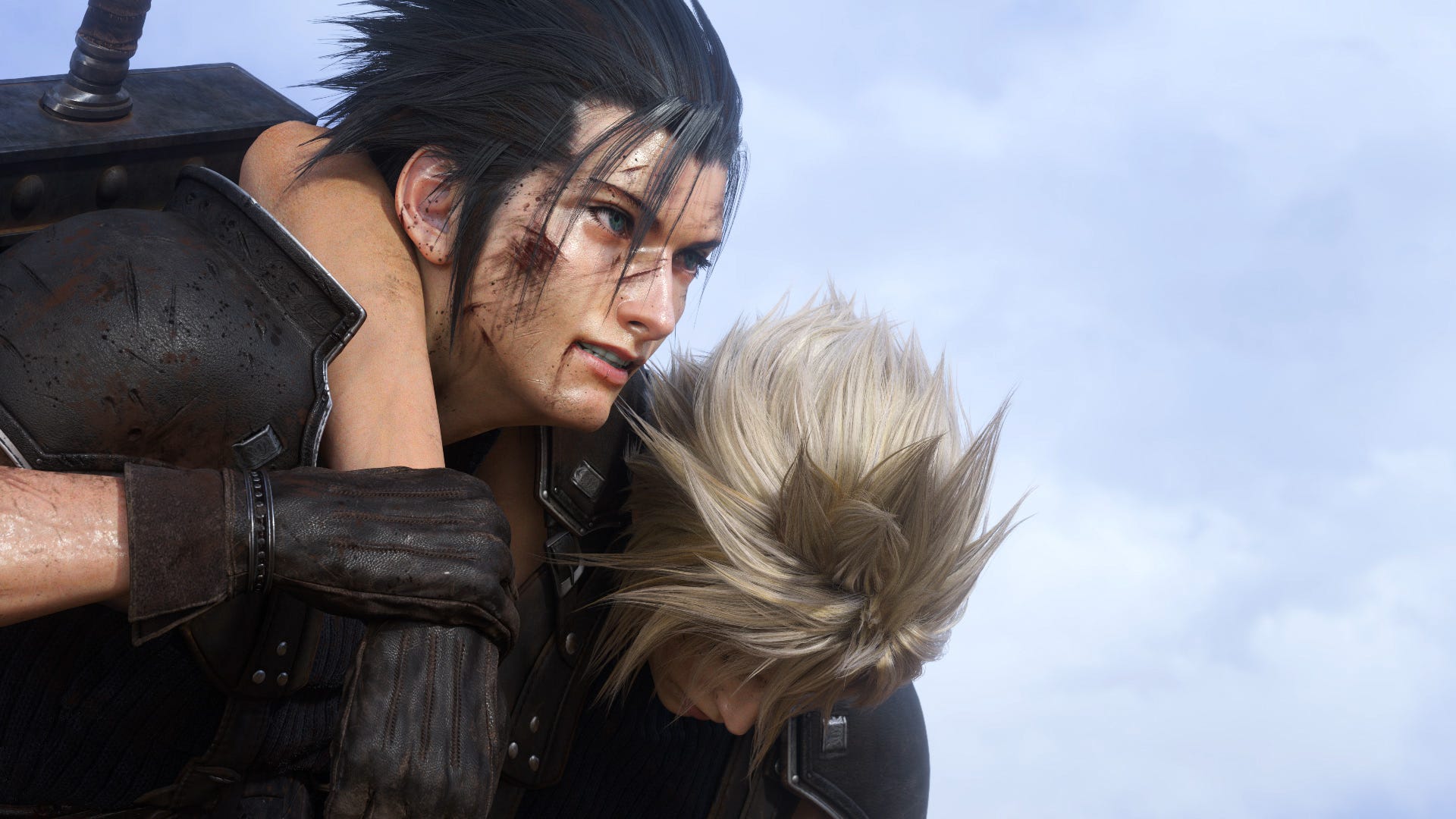
Rebirth is chock-a-block with mini games, appropriate given this was a calling card of the source material. Most are admittedly excellent—the new card game Queen’s Blood especially—but some are obnoxious and have obtuse pathways to achieve success. Fort Condor in the Junon region very nearly made me abandon my desire to do everything the game had to offer in its side content, and Glide de Chocobo in Cosmo Canyon required me to consult multiple YouTube videos to even get an inkling as to what full completion would require. The game’s final side quest also suffered from a bug that locked players out of completing it and receiving the associated trophy, which lingered for weeks until it was finally patched out. I had little intention of doing the New Game+ playthrough that this platinum trophy requires, but was deeply disappointed nonetheless to have to move on from my final optional objective; trophy hunters would no doubt have felt this sting much more keenly. Most egregiously of all: because the game frequently forces you to use certain party configurations—a design choice I like, for the record—but doesn’t allow you to save loadouts for each character, I spent literal hours of playtime shuffling materia, accessories, and weapons between my go-to roster and the folks I was temporarily required to use. This oversight is downright embarrassing given how common this feature is across the action RPG genre; they themselves implemented it for Eikonic abilities in FFXVI, which released months before Rebirth! There is simply no excuse for its absence.
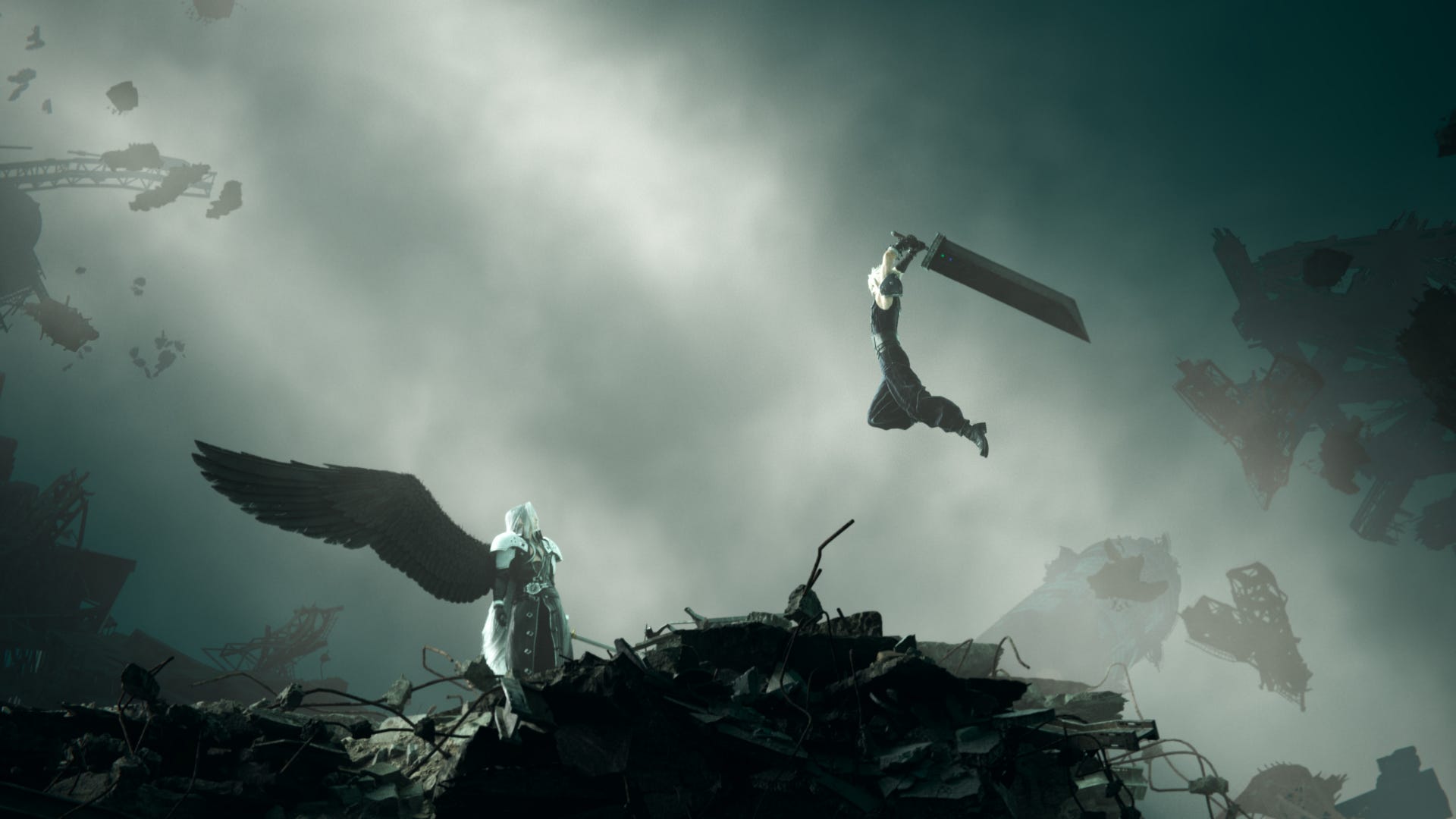
With regards to the game’s narrative, there is little I can discuss without violating the spoiler-free nature of this review. I will say, however, that the expansion of side characters and locations only briefly alluded to in the original game and inclusion of folks from the wider Compilation of Final Fantasy VII universe work together to create a story that is specific and lived-in, with deeply interconnected key players that all have clear skin in the game. As for the promise of “the unknown journey,” there are less deviations than you probably expect; but when they happen, they are spectacular and at times outright awe-inspiring. The game’s final chapters are especially explosive and deliver a series of final bosses (it is a Final Fantasy game, after all; surely you didn’t expect just one) that left me grinning from ear to ear hours after the credits rolled. Rebirth’s ending has once again tantalized us with the prospect of a break from fate, and the stage is set for a thrilling conclusion that might more fully realize the promise of a blank check that we all assumed Remake’s ending provided.
Verdict
Final Fantasy VII: Rebirth fully realizes the potential of this story and cast of characters in ways we could only dream of in 1997, while providing arguably the best action combat and world design that SquareEnix has ever crafted. While some of the design choices are frustratingly out of touch, and a few of the mini games are true stinkers, the vast majority of the content in this game ranges from good to excellent. This “unknown journey” is well-worth taking, and this game has firmly established itself as an early front runner for 2024’s Game of the Year.