I have always been an avowed Souls hater. The thought of a developer intentionally making it as hard as possible for players to experience their game felt mean-spirited and stubbornly out of touch with an industry that had broadly embraced long overdue quality-of-life improvements. Most of the Souls players in my own circles didn’t help either, as any criticism of their beloved franchise would elicit little more than “git gud,” an epithet against the poor uncultured souls who simply weren’t skilled enough to be in the club. My first real attempt at a Souls title, a weekend binge of Bloodborne during a free PS+ trial, went over like a lead balloon: six hours of banging my head against the introductory area taking death after countless death, making no real progress, unsure of what the hell I was doing wrong and how anybody in their right mind could willingly do this to themselves (let alone enjoy it). I offered my apologies to Nick, who lists Bloodborne amongst his most personally important games ever made, and concluded that the experiment was over. Verdict: these games are just not for me.
But, my own affection for my dear friend and compulsive need to see more bite-sized red cases on my shelf led me to eventually track down a physical copy of Dark Souls: Remastered on the Nintendo Switch. At the time, Spring Break was approaching along with a much-needed reprieve from my university teaching job, a position that I love deeply but that carries with it a large degree of uncertainty as a series of renewed one-year contracts. At that time I was not only unsure that I would still have the job after the middle of May, but also that the position would even exist at all; no funds had been released, and there was no communication coming from the office of the Provost amidst a campus-wide eight percent reduction in expenditures. I had a rapidly-approaching end of lease date and no knowledge as to whether or not I would be signing for a new apartment in town or for a U-Haul to load up my life and move across the country for the third time in 18 months. As the weeks flew by with no clarity on my situation, and no real ability to communicate to my students why my own mental health was deteriorating, I found myself squarely in the middle of the deepest depression I had ever experienced. It was becoming difficult to continue pouring into my work on campus knowing that it might result in nothing but the sudden and unceremonious removal of my position. If it’s all going to end, then what’s the point in putting this much of myself into my work?
I had just wrapped a 108-hour playthrough of Final Fantasy 7: Rebirth down and felt a need for a change of pace. Gobbling up such a sumptuous, sprawling, and emotionally engaging RPG in a relatively short time alongside my depression was a potent cocktail for burnout. Other backlog candidates such as Xenoblade Chronicles seemed like too much game—or in the case of Pikmin 3 more brain than I wanted to use—but there was Dark Souls: Remastered winking at me with its knight-by-the-fire cover. I distinctly remember thinking to myself this is perfect–I can start it, tell Nick I tried in good faith, and have absolution from ever touching another one of these stupid titles again. Thus, amidst the backdrop of a mental health low point and career uncertainty, I started Dark Souls almost ionically with the full intention of dropping it like a hot pan after two to three hours. To my surprise, what I discovered was a game that was certainly difficult—very likely the hardest I’ve ever beaten, save perhaps Cuphead—and sought not to make my life as miserable as I assumed, but to instead forge me in fire to make me great. Here was a game that stands as a pivotal turning point in how the industry would approach third-person action RPGs for a generation, and, somehow, exactly what I needed at this particularly challenging moment in my life.
Some analysis paralysis almost took hold on the character creation screen: what are these classes, what do these stats do, and so on and so forth. This would not lessen over time with the many systems in Dark Souls that range in clarity from “vague” to “good fucking luck,” but I figured it ultimately wasn’t going to matter for a first-time player anyway, so I started as a knight. I made my way through the Undead Asylum and was surprised at the number of helpful button command messages scattered throughout the dank, dark dungeons. For a game that was supposedly opaque as hell, they gave me an awful lot of foundational information. Landing at the Firelink Shrine, I was taken aback by its melancholic string music and sad, lonely assembly of people. This was the beginning of my hero’s journey, and our starting area feels like a funeral complete with dirge-like refrains—what’s that about? I was intrigued, to be sure—what happened to these people, and how did some find the will to go on knowing that being consumed by madness was the fate that awaited them all? I’m a sucker for melancholy (my favorite band is the Gorillaz) and this was hitting all the right notes. Now I had a choice to make—left or right from the bonfire?
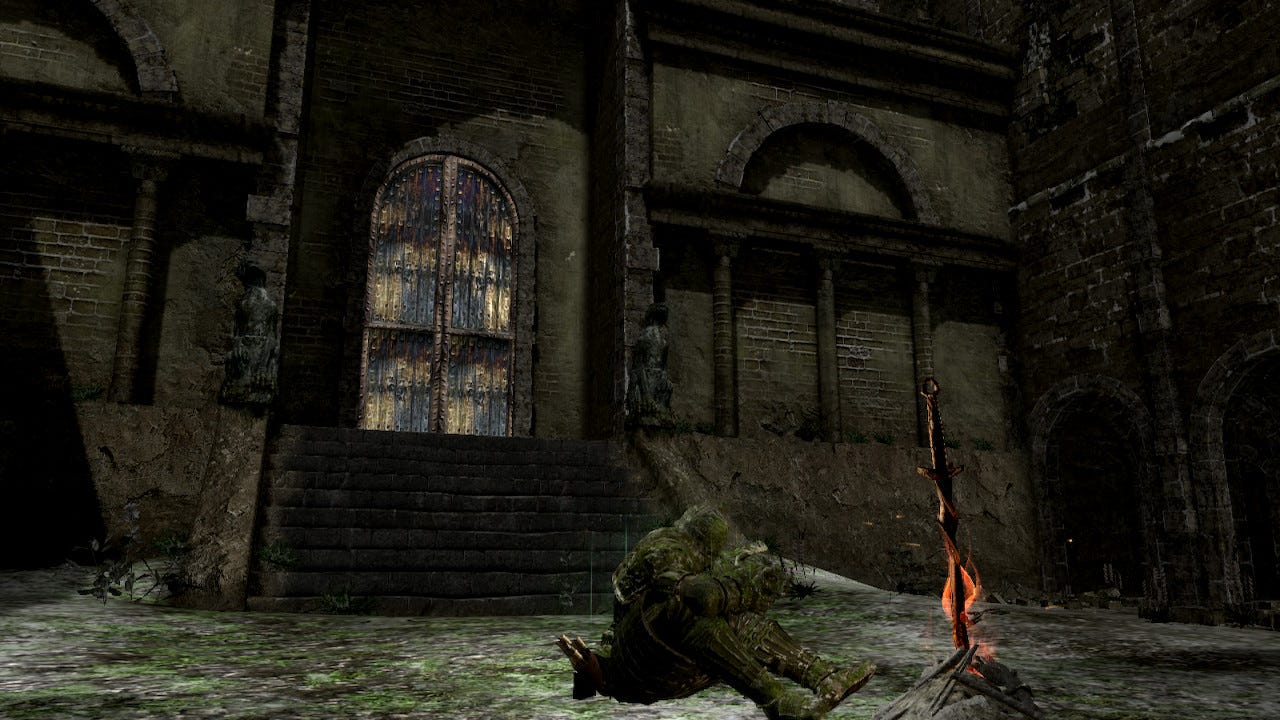
I went left, and my prediction of quickly dropping the game very nearly came to pass. Running straight into a skeletal buzzsaw in the nearby graveyard, I was in complete disbelief at the sudden and violent spike in difficulty. No matter how I shielded, hit my parry timings, and got in my attack cycles, I took death after countless death and was frustrated to the point of tears: I’m fifty feet from the starting bonfire—what the hell am I doing wrong? I had heard that trash mobs in Souls games were capable of dropping even the most highly-leveled players if they weren’t careful, but this was ridiculous. Eventually, I did a very un-Chris thing and simply left for a different location. Normally, I will beat my head against the wall until it caves, but I could feel my metaphorical skull cracking and decided a tactical retreat was in order. Going right at the bonfire led me to the Undead Burg just before my desperate plea to Nick for guidance was answered: “brother, you don’t want to be over there.” Sometimes, it seems, the lesson is that you are simply not in the right place to succeed and must accept when the universe tells you to move on.
All at once the game opened itself up to me, and I to it. Moving methodically through the Undead Burg I saw the game teaching me multitudes without ever a single written word. Enemies used the same basic tools that were available to me: quick sword strikes, long spear thrusts, slow ax swings, blocking and parrying, and drinking from Estus Flasks to recover. All of them carried pros and cons, which were apparent to me as I learned to exploit them for my own gain (and how I could therefore be exploited if I made the same mistakes). Death came swiftly and often, and with each one a kernel of wisdom: shield that, roll this, circle around there for the backstab, don’t hit that Flask until they’re down, watch out for that extra-long wind-up. In truth, the game in many ways is really only opaque if you don’t bother to observe what’s around you or learn from your mistakes. In other words, there is always something of value to be gained if you stay present with those around you instead of fearing that which you cannot see or control.
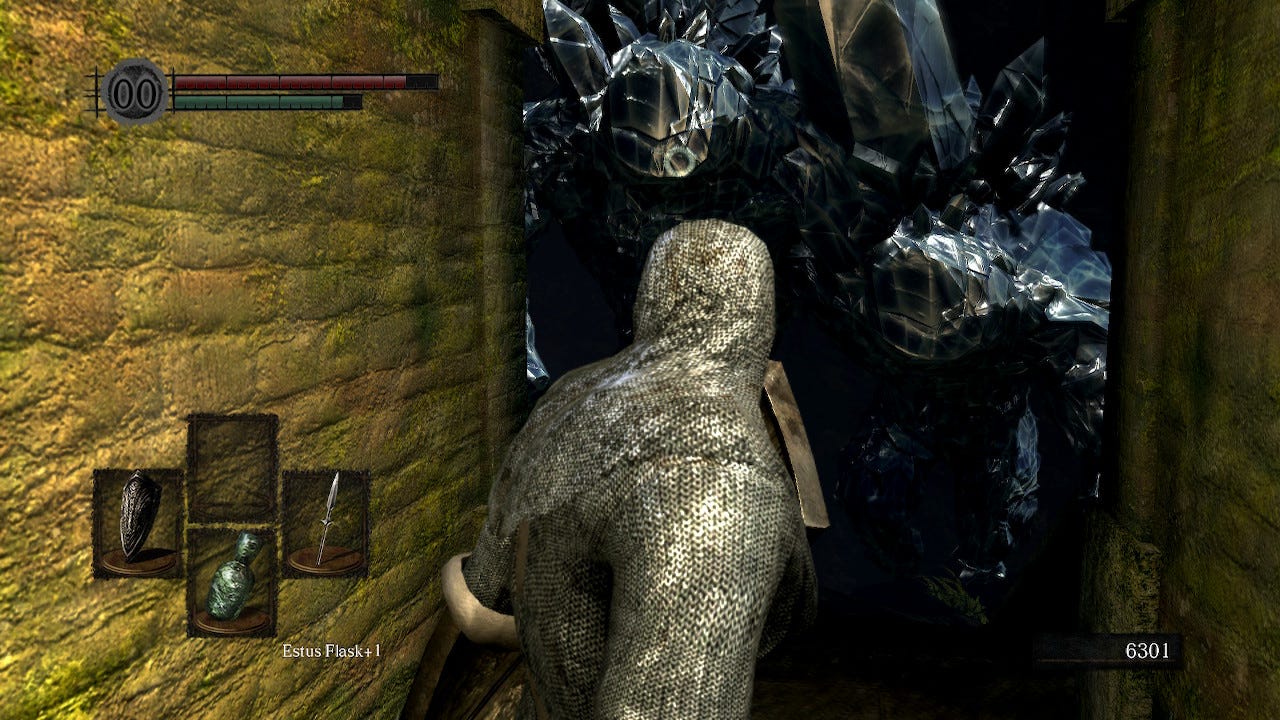
As a devout Metroid fan, I found myself smiling from ear to ear at the frequent discovery of double-back shortcuts and layered map design that the Souls games are known for. Kicking down the ladder to the first bonfire at the Undead Burg and having instant access to a path that took me more than a half hour to access previously felt like a massive victory that spurred me onward. I saved a few people in a few precarious situations despite being skeptical of their own motives, and arrived at my first real challenge: the Bell Gargoyle. I quickly learned its attack patterns and felt for the first time that maybe I could actually beat this game—only to feel my heart drop out of my chest at the sight of a second health bar materializing under the first. You’ve gotta be fucking kidding me—TWO?! I had the option to summon Lautrec, but felt like that would be a cop-out. I wanted to do it by my own hand, but couldn’t figure out how; rather than staying in a blender, I did another very un-Chris thing and started looking for strategy videos. Despite having this newfound knowledge base, I still struggled and felt myself feeling the urge once again to just give up. Nick’s encouragement continued coming through the pipeline: “First difficult boss. You got this!” And, finally, after hours of futility, I had The Run. Gamers will instantly recognize this: everything goes according to plan, your strats are locked in, and you get just the right amount of fortune to break through and achieve victory. I jumped off the couch and thrust my fists into the air as a feeling of elation I have rarely experienced in gaming coursed through my veins. All at once the notion of “git gud'' stopped feeling like a cheap shot and started to feel like an empowering directive: we believe you are capable of greatness, if only you can fully utilize the skills and talents that you already possess.
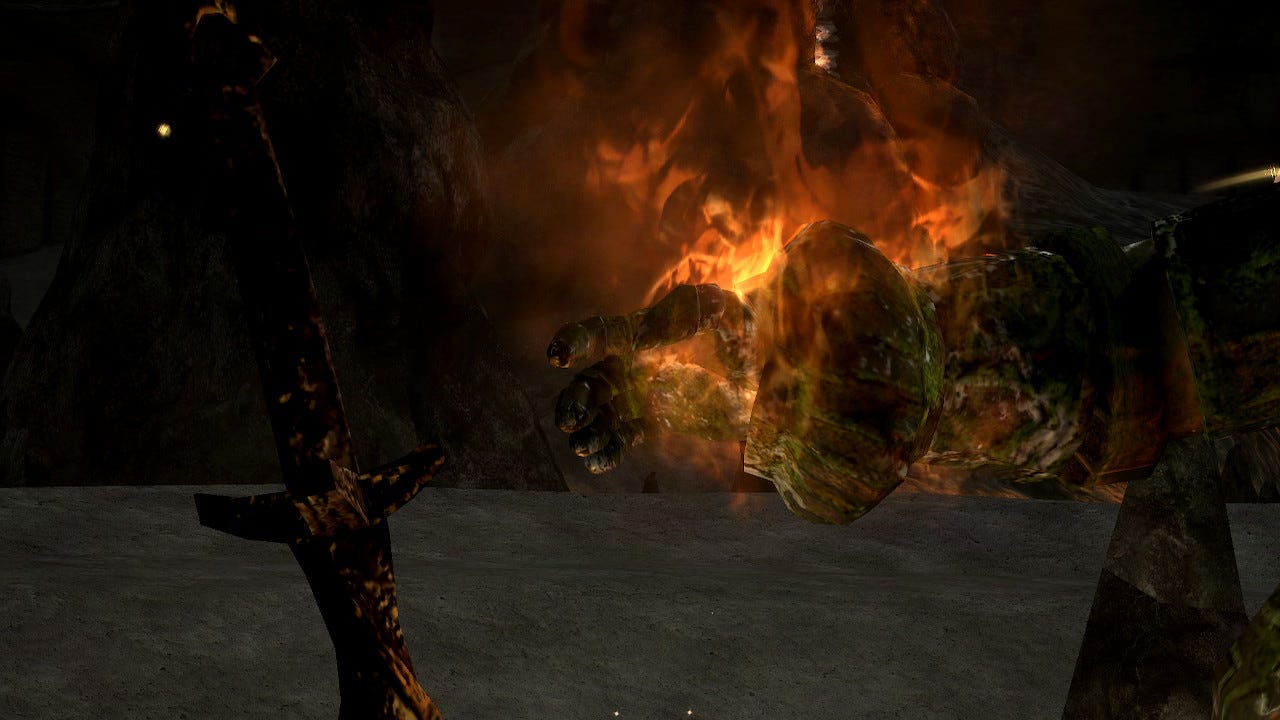
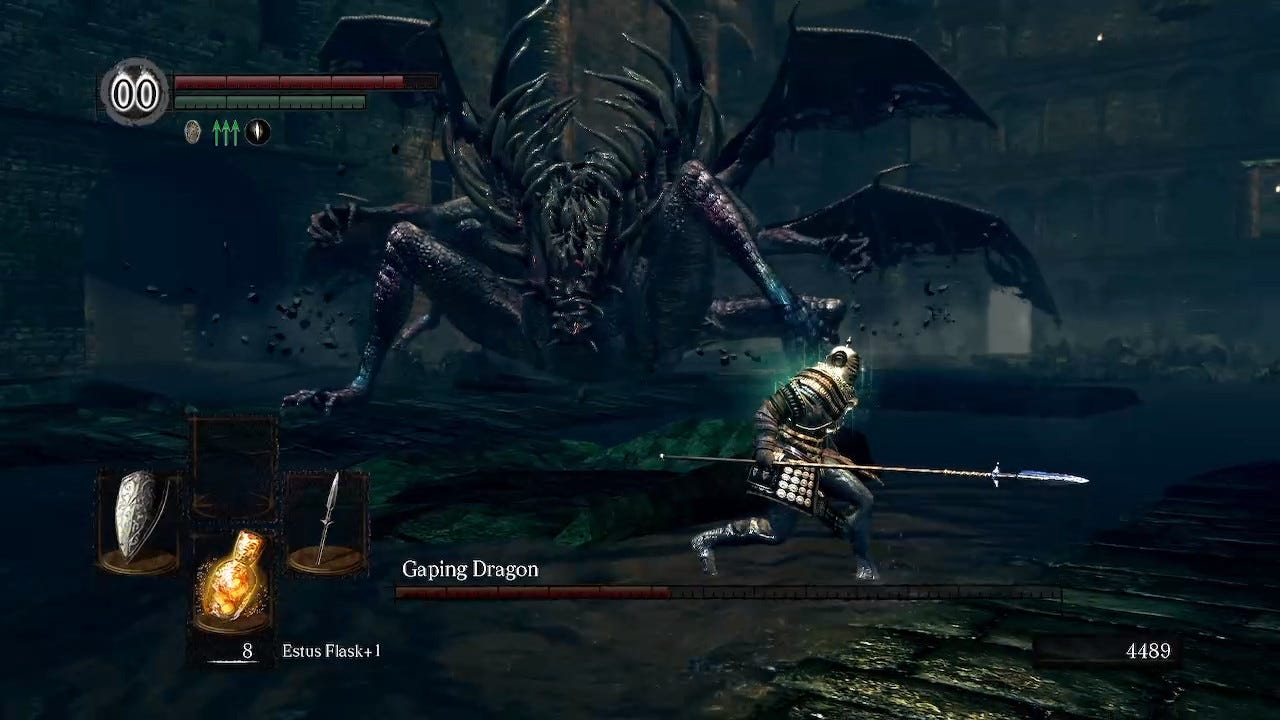
It wasn’t long before Nick and I started having parallel play sessions on Discord, and, eventually, my first foray into cooperative online gaming since a six-month fling with Destiny. We took a run at the Gaping Dragon together after I had struggled through a dozen or so fruitless attempts with the full expectation that Nick, a Souls veteran, could carry me if I struggled. Instead, he touched a hit box on the tail during its crawling animation, killing himself instantly and leaving me to defeat the beast at scaled health–which, for the record, I did. If ever there were a moment that encapsulates the Dark Souls experience, this was it, and it was around this time I started to believe that yeah, I can “do Dark Souls.”
It was also around this time that a lot of FromSoftware’s infamous jank—and the warts associated with any 13-year-old game—began to rear their ugly heads. The targeting system is at times frustrating and at others exceedingly useless; why on Earth would you make the arbitrary decision after landing a backstab to break targeting as my prone quarry crashes limply to the ground? I just successfully utilized this system (one of few that you bothered to give me a lick of explanation about!) and you’re punishing me for it?! Similarly, as I crawled down the ramparts into Blighttown, camera issues began to have seriously adverse effects on my experience. Whether pinning my view behind a crossbeam while multiple enemies converged upon me simultaneously, hijacking my ability to look anywhere as a target-locked aerial enemy looped around my head, or limiting my field of vision in a manner that caused me to get stuck on/fall off of/clip through unseen geometry in the floor (if I had a fuckin’ nickel for every time…I could retire), these two systems and the ways they interact do far more harm than good for the player. Systems-wise, while I did appreciate the learn-by-experience mindset in broad strokes, there are times its implementation created unnecessary difficulty that DID feel a bit intentionally mean-spirited. I can’t tell you how much humanity I must have wasted in the Chaos Servant ranks by switching covenants as new options presented themselves as not only was the consequence for switching not communicated, it was not even readily clear that there would BE a consequence of any kind.
The positives continued to outweigh the jank, however. Making a corpse run far from a bonfire to recover my lost souls never ceased to get my heart rate up and my palms sweaty, a perfect balance of “hard but fair” that kept with the overall ethos of asking me to learn from my mistakes and then be better. Within this weird, wonderful world, colorful characters and memorable moments abound, like forming a covenant with a talking cat or transforming into Trogdor with the Dragon Head Slab and burninating the countryside. Information about Lordrath and its inhabitants, scarce though it may be, was engrossing, and when the game did spend its narrative tokens for big reveals, it never failed to make an impact (soaring into view of Anor Londo for the first time, for example, dropped my jaw and took my breath away). I found myself shaking my head in disgust at the cowardly Siegmeyer, only to feel pangs of pity that his only moment of valor cost him his life; chuckling at the naked ambition of Patches and his utter inability to capitalize on his avarice; and, most of all, discovering a deep kinship with Solaire of Astora.
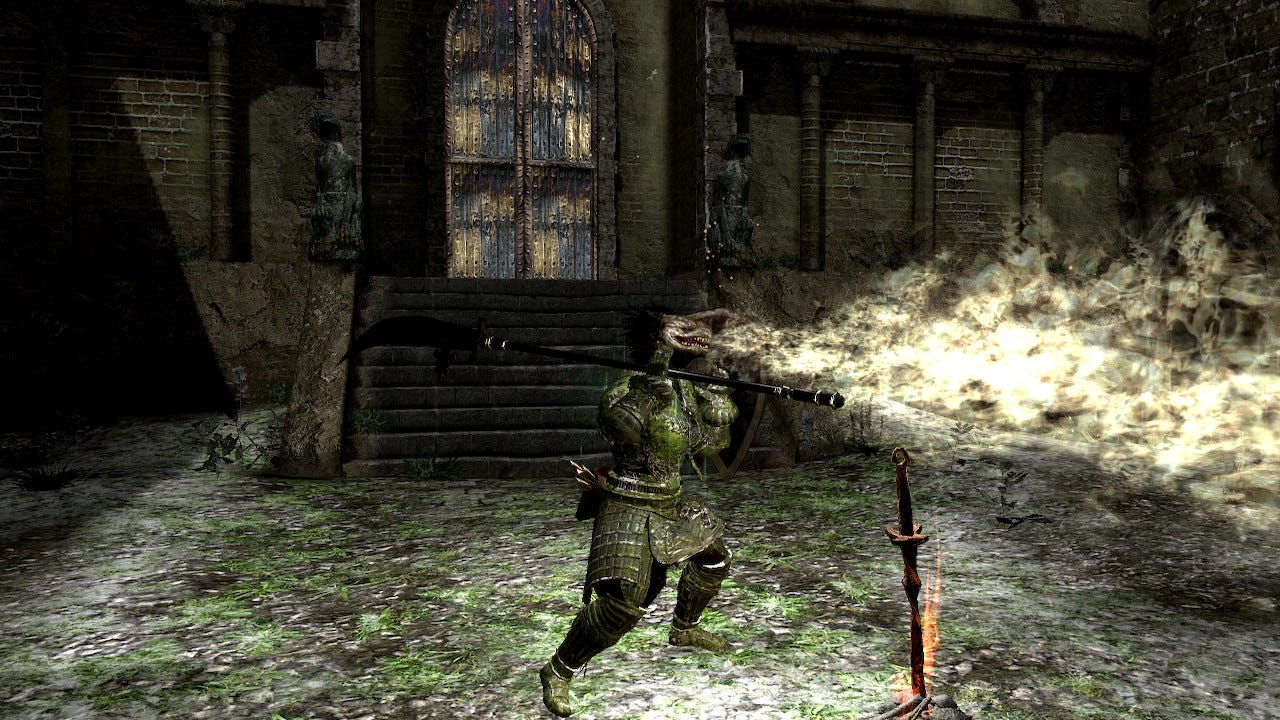
Naturally, I was following a side character quest guide (when I beat a game, I beat ALL of a game) and Solaire rose above the pack of other ho-hum personalities as I continued to encounter him. His relentless optimism and spirit of jolly cooperation kept me going as I came into my own with an ideal build and play style (full Stone set, Grass Crest shield, plus-five Black Knight halberd–unga bunga, baby).
Yet even after saving Solaire from his mind-rotting fate, his final scripted encounter is one of dejection and disappointment. He could not find his sun, and was left to question if the whole ordeal had been worth it. I was struck by the parallels to my own present situation—love and optimism giving way to depression and skepticism—and felt a brief pang of despair: have I wasted the last year and a half of my life the same way Solaire has?
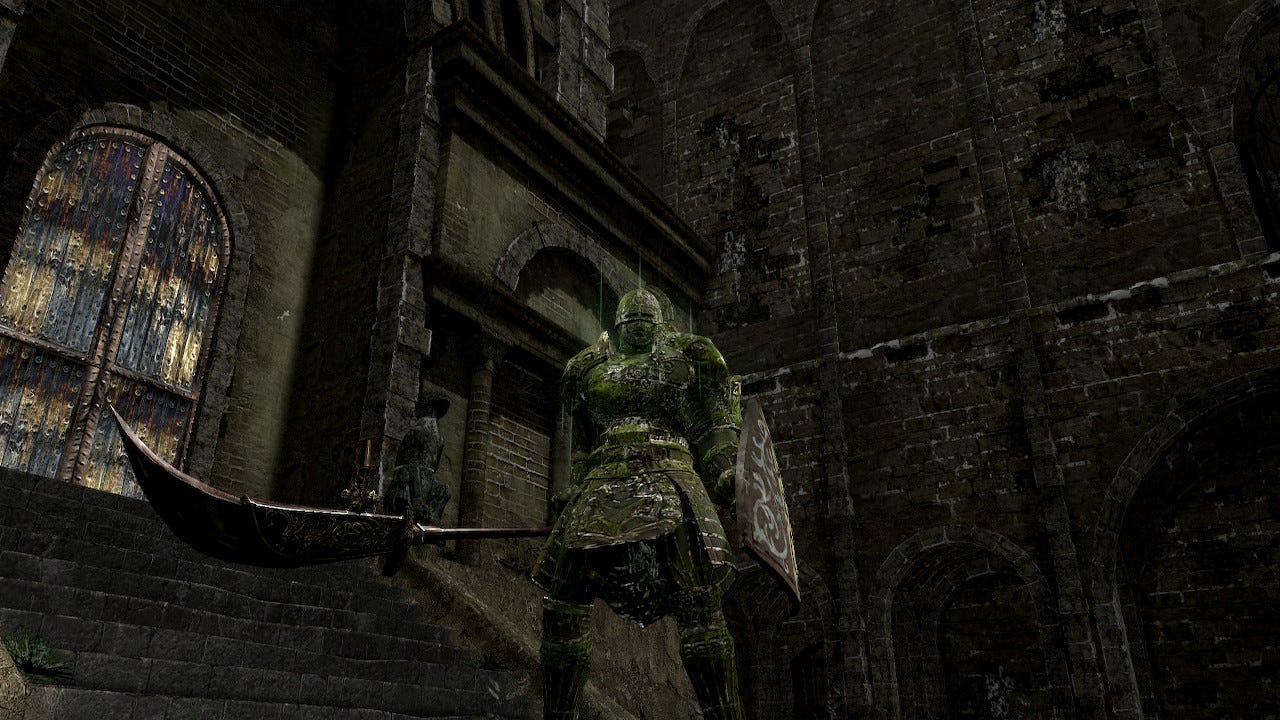
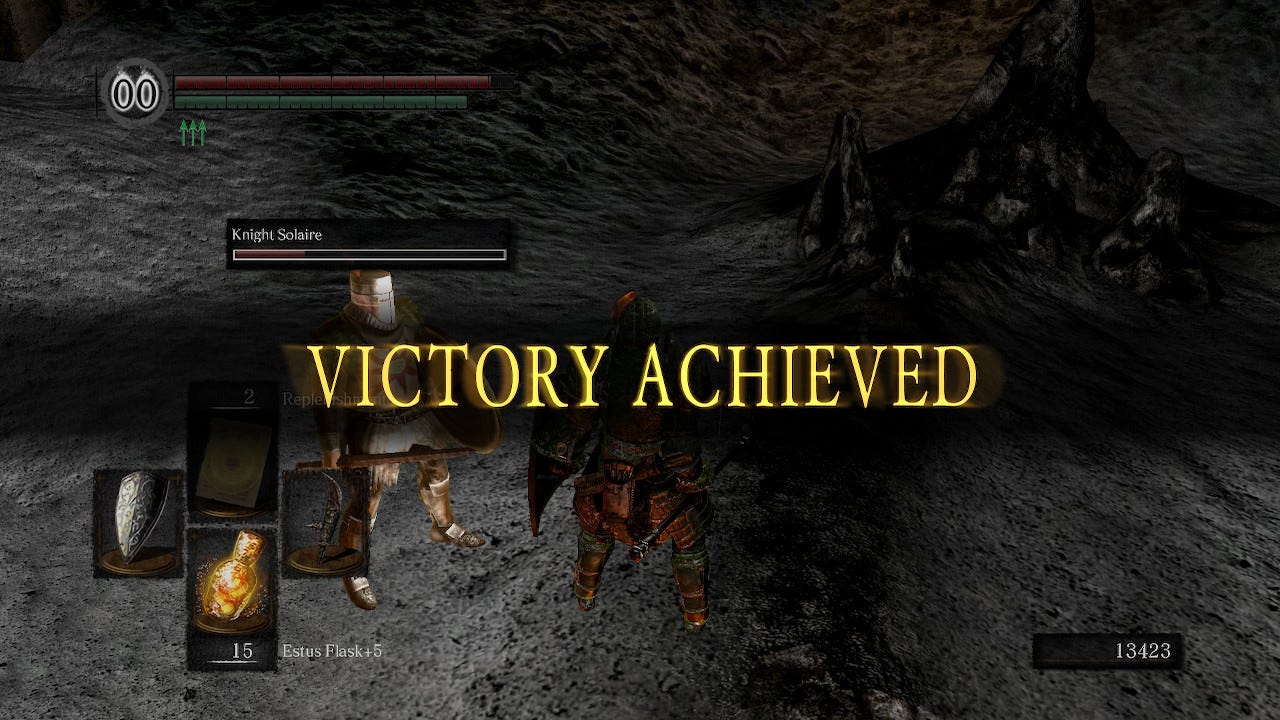
But this was not the last I would see of him. Deep in the Kiln of the First Flame before the final, decisive battle with Gwyn, Lord of Cinder, was a summoning circle for my good friend Solaire. With him by my side we strode through the final mist wall, and I was once again taken aback just as I was at the Firelink Shrine all those hours ago: where I expected the bombastic and operatic finish associated with the conclusion of the hero’s journey, I was met with a sad, unaccompanied, melancholic piano and no cutscene of any kind. There would be no great joy to be had from winning this battle (which we handily did), only the kind of soft introspection that befits the end of an entire age of man and the many unanswered questions Dark Souls leaves in its wake. I kindled the flame, watched my character immolate, and sat back with a sense of quiet contemplation as the credits rolled.
This game is far from perfect. Beyond the bugs and aged design choices, the final few acts of the game smack of “oops we’re out of money” and feature some truly flaccid boss encounters (looking at you, Bed of Chaos). But overall what Dark Souls: Remastered does well…holy shit, it does well. The combat is thrilling and requires patience, an understanding of your skills, and the ability to learn. The environments are evocative and rich with detail, accentuated by a score that knows when it’s time to settle into the background and when it’s time to take center stage to punctuate a moment of discovery. The map design is brilliant and never fails to reward your progress with helpful shortcuts that elicit sighs of relief. And yes, it’s hard—very hard—but only rarely is it intentionally unfair or full of cheap “gotcha” moments (if I never set foot in Sen’s Fortress again, it’ll be too soon).
More importantly, this game gave me something to focus my energy upon when every day of work was an exercise in masking my own inner turmoil. And its design ethos validated a number of things that I have long held to be true about my own life and work: it IS worth the effort to pour into an unknown future; trust that when you’re in the wrong place, the universe will show you a sign; stay present with those around you and your rewards will be deep and wide; you are capable of greatness just as you are. Somehow, this game was exactly what I needed—a bonfire newly-kindled within my soul, a light in a dark place pushing back the shadows that threatened to consume me. To Nick, and all the rest who tried for so long to get me on board this train: I did it, guys. I finally got gud.
Verdict
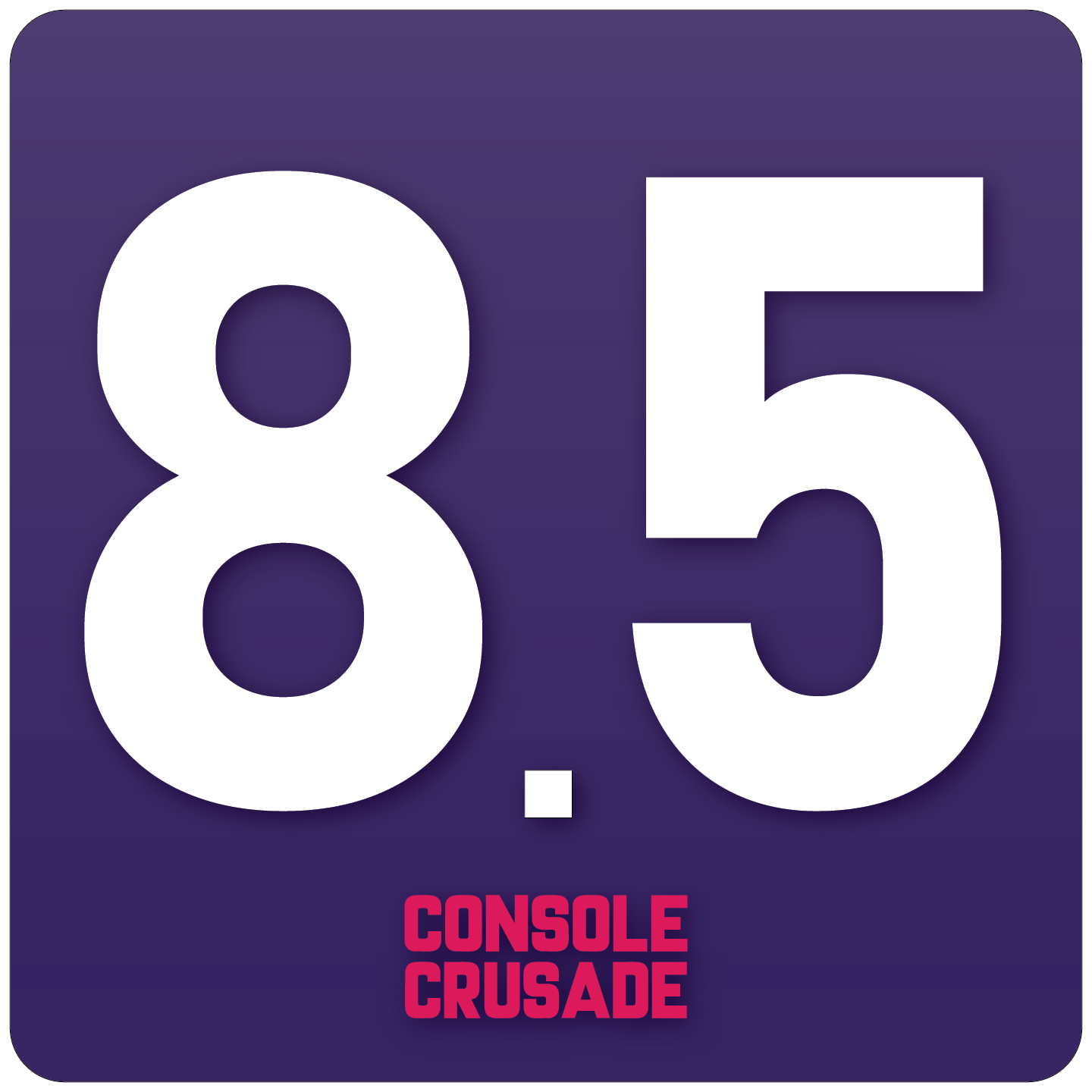
At thirteen years old Dark Souls: Remastered begins to show its age, as well as the struggles of a AA company still refining its formula. But the layered map design, evocative world, thrilling combat, and memorably difficult boss encounters show that the early promise of their once-nascent genre is still worth visiting in the contemporary game space.