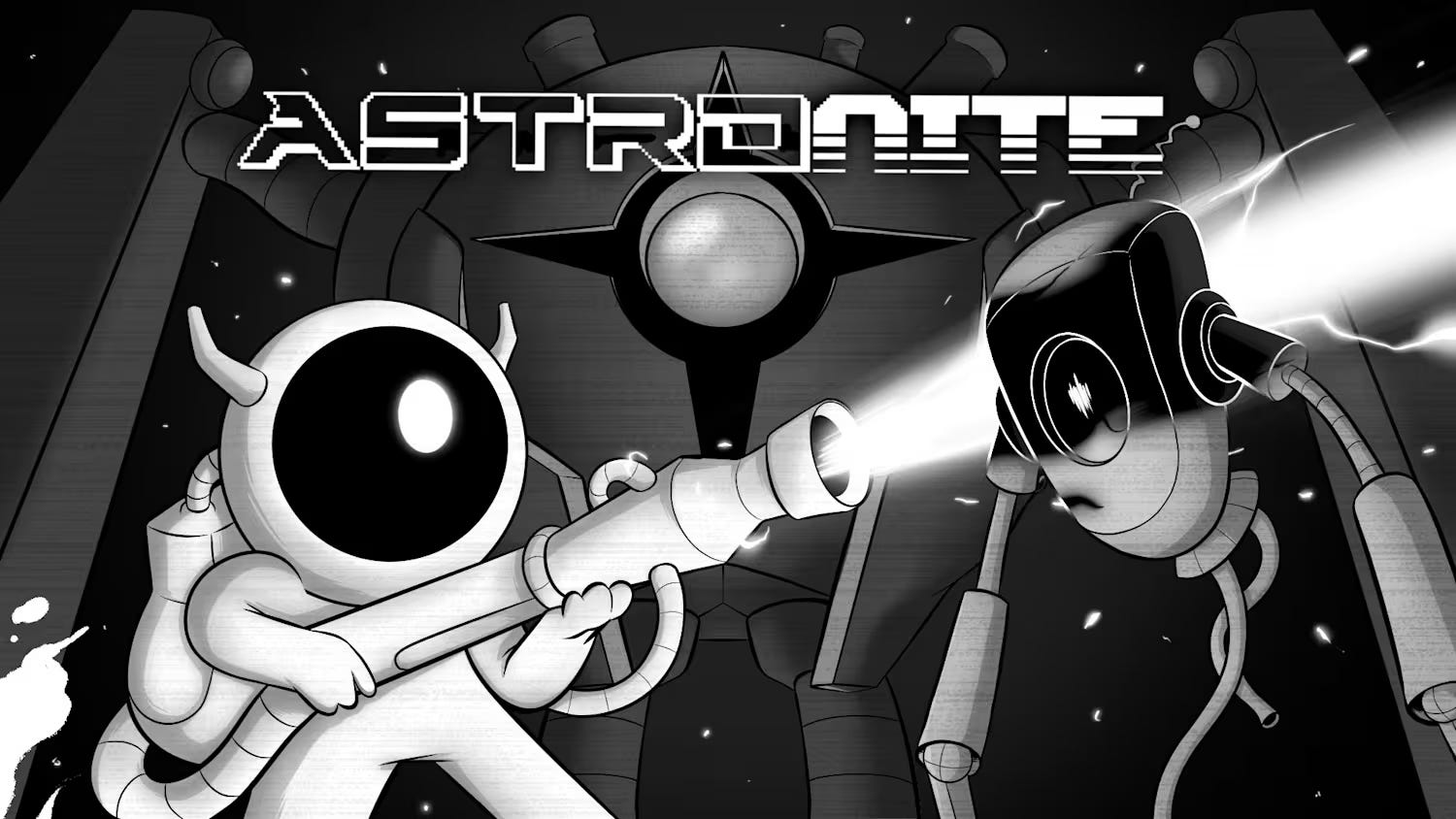
I’ve never met a Metroidvania I didn’t like, and Astronite is no exception: this “1-bit Metroidvania,” the only outing to date by the tiny Dume Games Studio, was part of a Gamestop 4-for-$40 sale haul I snagged on impulse. It might not have ever escaped the backlog if I hadn’t been looking for something a bit smaller after knocking out the latest Pokemon game, but I’m glad it did. This particular game skips the “Vania” part so it’s probably more accurate to call it a “Metroid-like,” but regardless — this is my wheelhouse, and coming back to it always feels great.
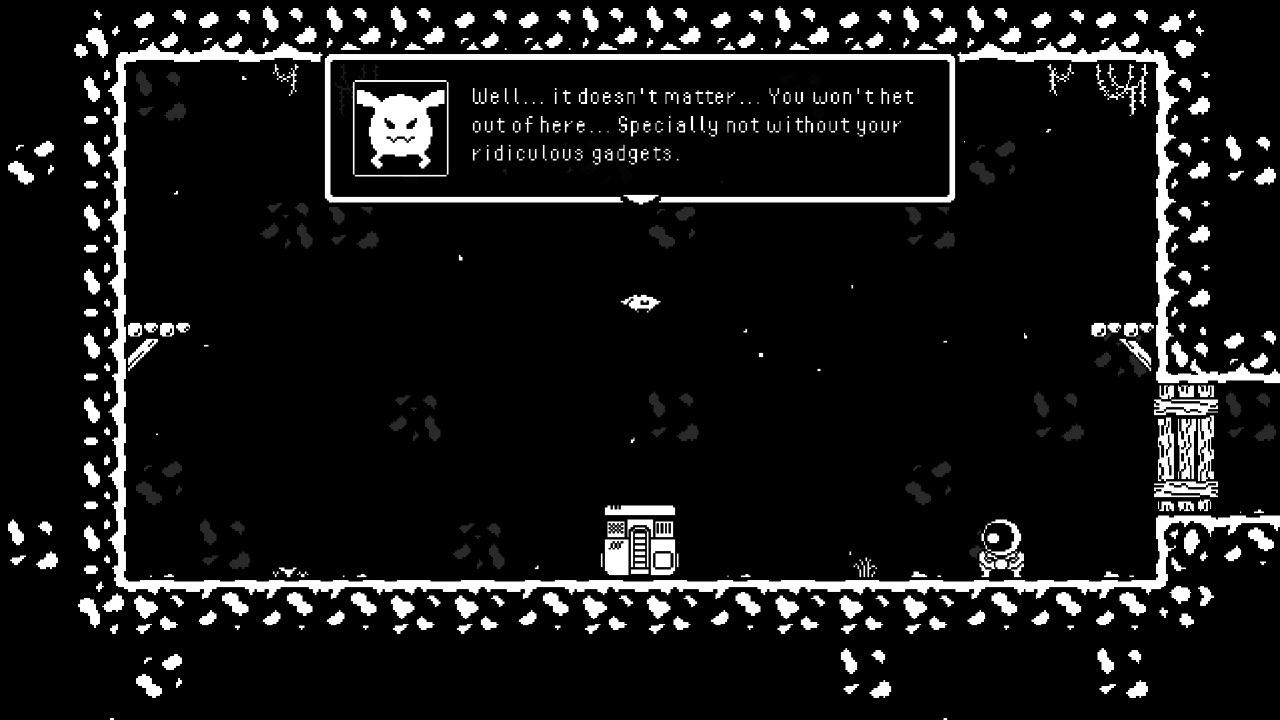
The game oozes charm, albeit in strange ways. Black and white pixel art is of course evergreen, but it was the prologue cutscene’s weirdly translated text replete with stilted grammar, floating punctuation, and occasionally misspelled words that brought a smile to my face. The dialogue is mostly nonsensical plot and corny attempts at genre metahumor, but who cares? It’s cute. Here was a title that would feel right at home on the Ouya storefront back in the day, a bygone era indeed.
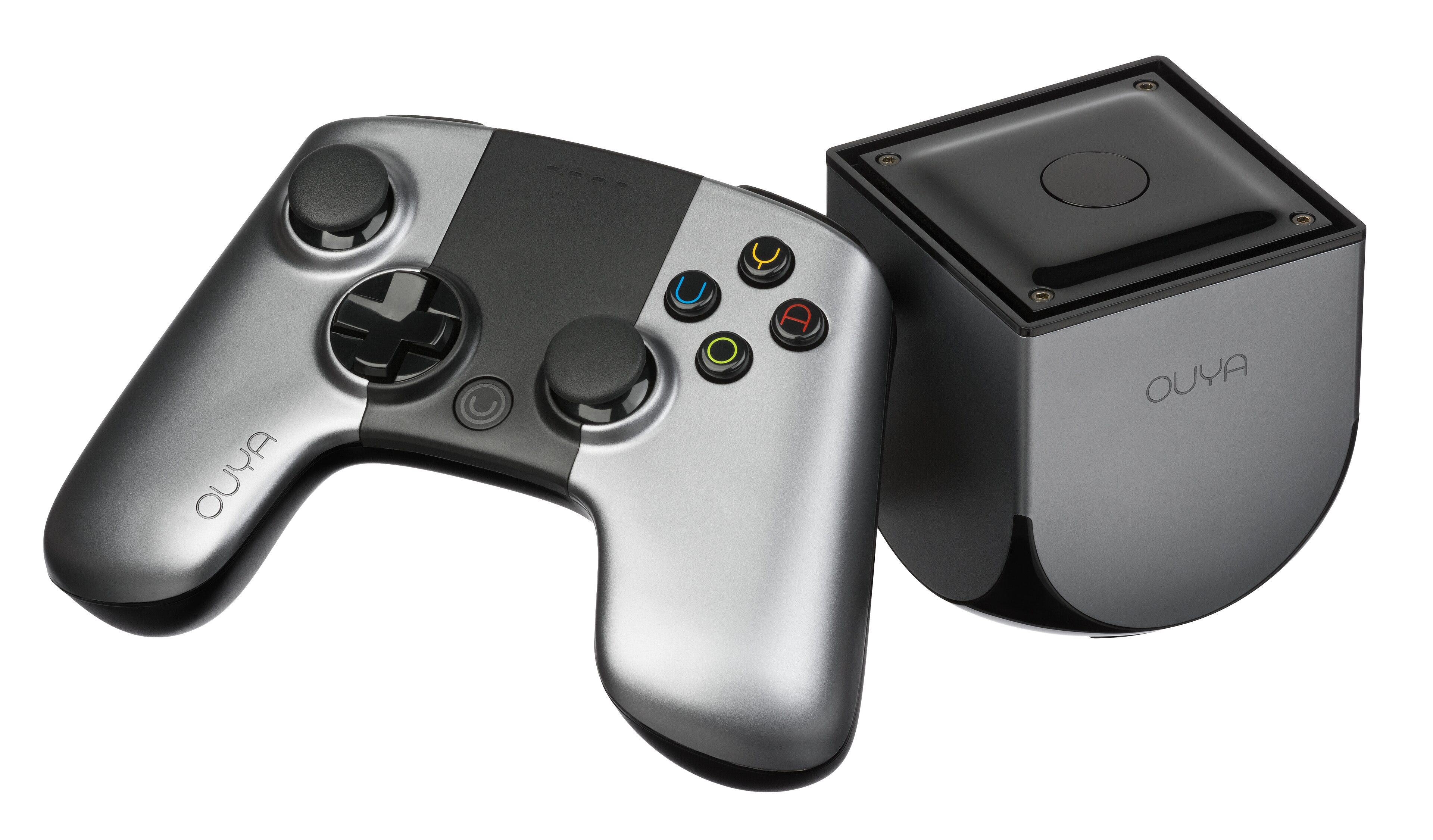
Ah, the Ouya—an ill-fated attempt at creating a designated machine for indie developers outside of the AAA home console ecosystem. Back in 2013 I was all-in on their mission and pre-ordered the damn thing for the low price of $99. Every title on their storefront had to be either free-to-play or free-to-try, with financial incentives for devs who made their games timed Ouya exclusives. Notably, this is where TowerFall first debuted as the flagship launch title. I had a great time that summer and the next fall putzing around and trying a bunch of homemade games, some of which were actually pretty solid. But it failed to attract much support from developers after the Big Three upped their commitment to indies, and it was functionally dead years before the servers formally shut down in 2019. I guess I’ll never get to see the ending of Motrya, an episodic homebrew RPG starring a wizard who can’t use magic (and a card game that’s totally not Triple Triad from Final Fantasy IX).
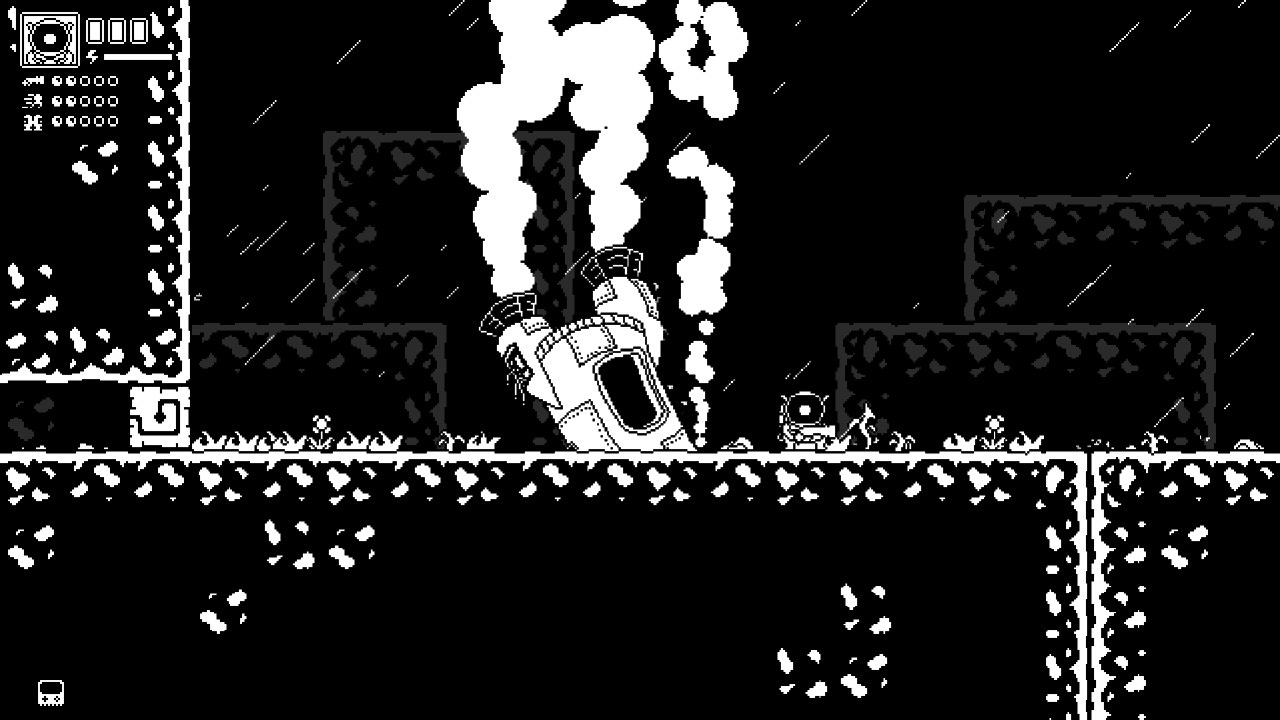
After the opening cutscene our plucky Astronite crash lands on the surface of an alien world and must navigate to the planet’s core to save it from a cancerous entity — yeah, it’s a Metroid-like alright. The titular protagonist is surprisingly expressive for such a pixelated little lad. Sit around for more than a few moments and he’ll start mugging for the camera, the gleam on his helmet suggesting a single eye that seems to wink at you: “remember idle animations on the SNES and Genesis? We sure do.”
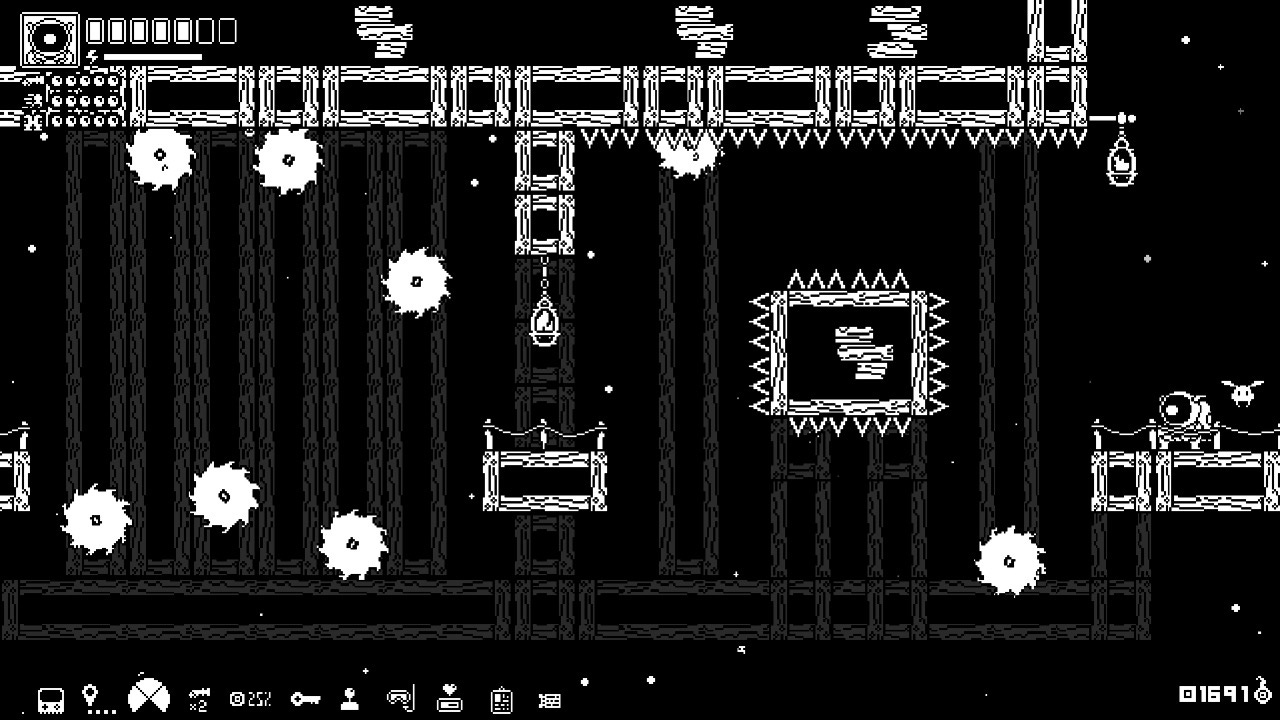
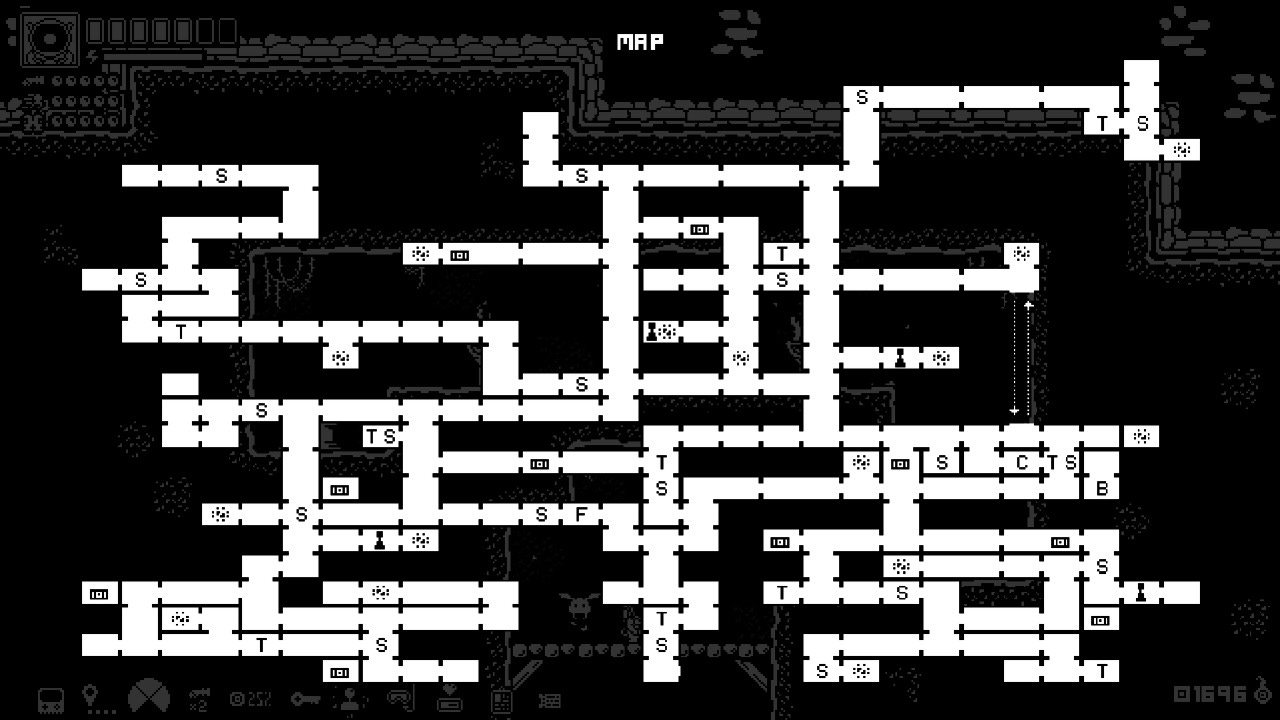
As any Metroidvania fan will tell you, a strong map is arguably the most essential element of the genre. Thankfully, Astronite’s is solid. It deftly uses the 2D Metroid design vocabulary of tight passageways, prescriptive paths that eventually double back on themselves to reveal new shortcuts through areas, and environmental hazards that become easier to navigate the more mobility upgrades you’ve found. That last piece is no joke — holy smokes, do they make you work to get through some of those hazard zones. I found the traversal challenge areas to be some of the most difficult I’ve seen in the genre (optional areas like the Path of Pain notwithstanding). The game controls well with tight and predictable movement, so deaths are always your fault for misreading timing or overextending into unknown space. At times it approaches the fine line between difficult and unfair — sometimes even puts a big toe right on it — but never crosses it, my ideal balance between challenge and reward. It’s also so short that overstaying its welcome would be literally impossible. The in-game play clock (which doesn’t seem to count time on the map screen) logged my 100% playthrough at 35 minutes, which translated to about 5 hours in real-time. This was a breath of fresh air following a 2025 filled with 100-plus hour RPGs — short games deserve love, too!
Power-ups and upgrades are scattered across the map at an acceptable frequency, which means full completion sickos like me will find plenty of incentive to keep moving forward. However, they’re all visible to the naked eye — mostly at the end of the aforementioned obstacle-laden paths. There are a few notable exceptions in the form of puzzle rooms that replicate classic games: Pac-Man, Space Invaders, and the like. While clever and fun to play, it still boils down to getting to the end of a room and receiving an item. This trade-off means all but one of its secrets can be discovered by simply walking through an illusory wall, and only yield currency-bearing chests to boot — not the most thrilling stuff even if you get down with traversal challenges. Simply put: it’s a Metroid ass map, but I found myself wishing for more creativity in how it hides and unspools its secrets.
The fact that there’s currency at all is a bit of a puzzler to me, especially given that this particular system is average at best. Defeating enemies or opening hidden chests yields currency called Shpirti that can be traded at the game’s lone shop for additional power-ups and optional upgrades. A corpse run mechanic allows you to scoop up your lost Shpirti following death, and given the overall difficulty of platforming sections each runback is satisfyingly sweaty. Here’s the thing though: having a shop in a game that’s this much like the original Metroid rubs me the wrong way. Currency and corpse runs are fine and have been used successfully in the genre before, but forking over currency from dead alien critters is a snore compared to scouring the map for power-ups using newfound abilities.
This simplistic approach to scattering and purchasing upgrades robs the player of the dopamine hit of discovering something the developers worked harder to conceal from them. If I know I’m going to find something at the end of every pathway or can just go buy it at the shop, it just doesn’t hit the same. Dume Studios have effectively sacrificed the most fun part of the genre — map exploration — in favor of platforming challenges and rote shop purchases in order to (presumably) keep the map at a manageable size. I get it, but it’s still a shame and puts a hard cap on my overall level of enjoyment. It’s the kind of thing that makes you wonder if channeling the worst 2D Metroid game using the color palette of the second-worst 2D Metroid game was the brightest idea to begin with. But even the first Metroid nearly 40 years ago had breakable walls!
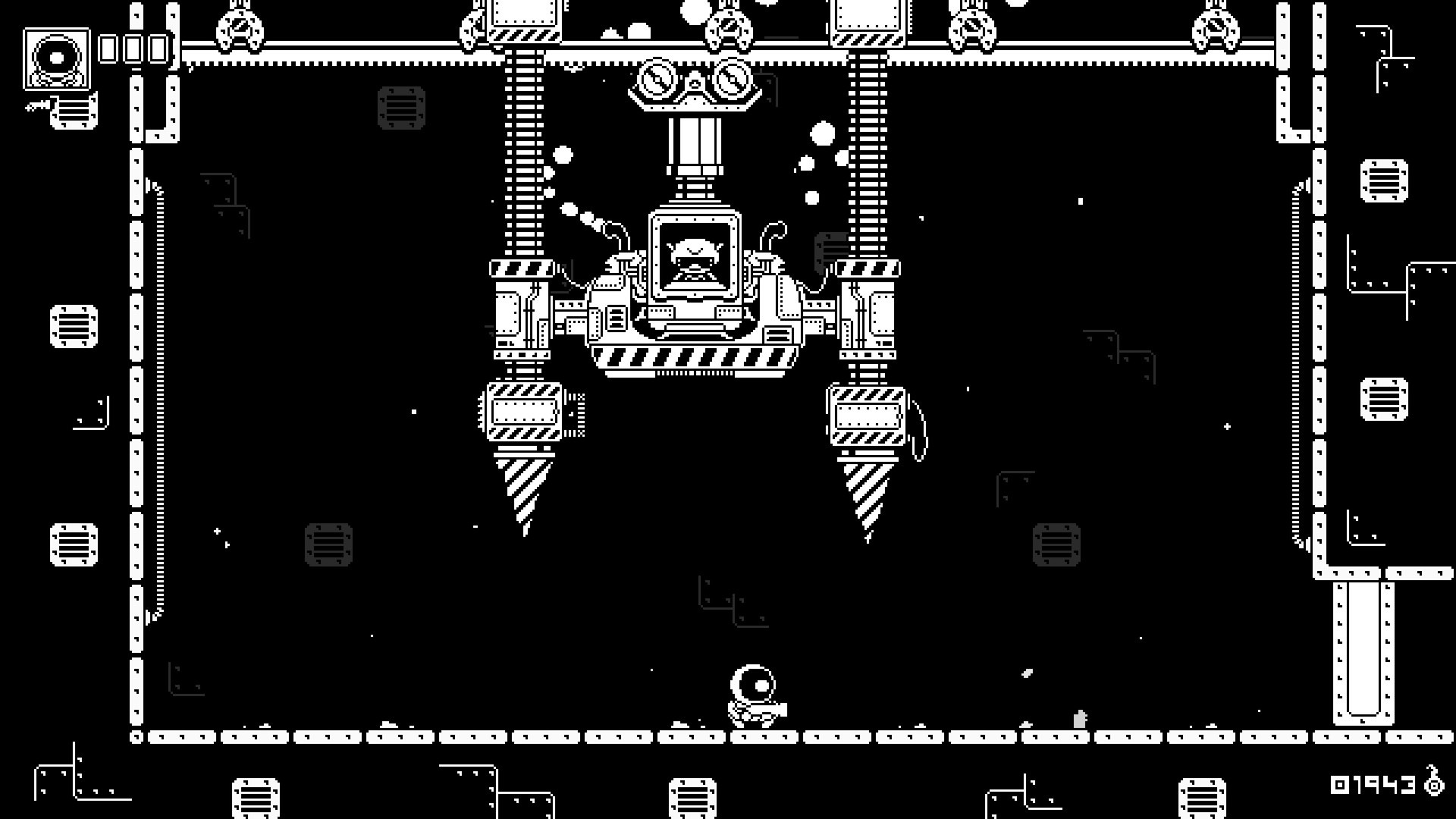
In the art department the bichrome color palette looks fresh and clean, and the developers wrung a surprising amount of variety out of such simple tools. Of course, a limited palette and set of textures is bound to create some issues with visibility. At times it was difficult to identify what was and was not going to deplete one of my precious few health bars. I couldn’t help but get frustrated when a solid white stalactite suddenly opened one eye and started lobbing projectiles at me — is it a bug or a feature that none of these things pop from the background art? Either way, it’s annoying “gotcha” game design that happened altogether too often.
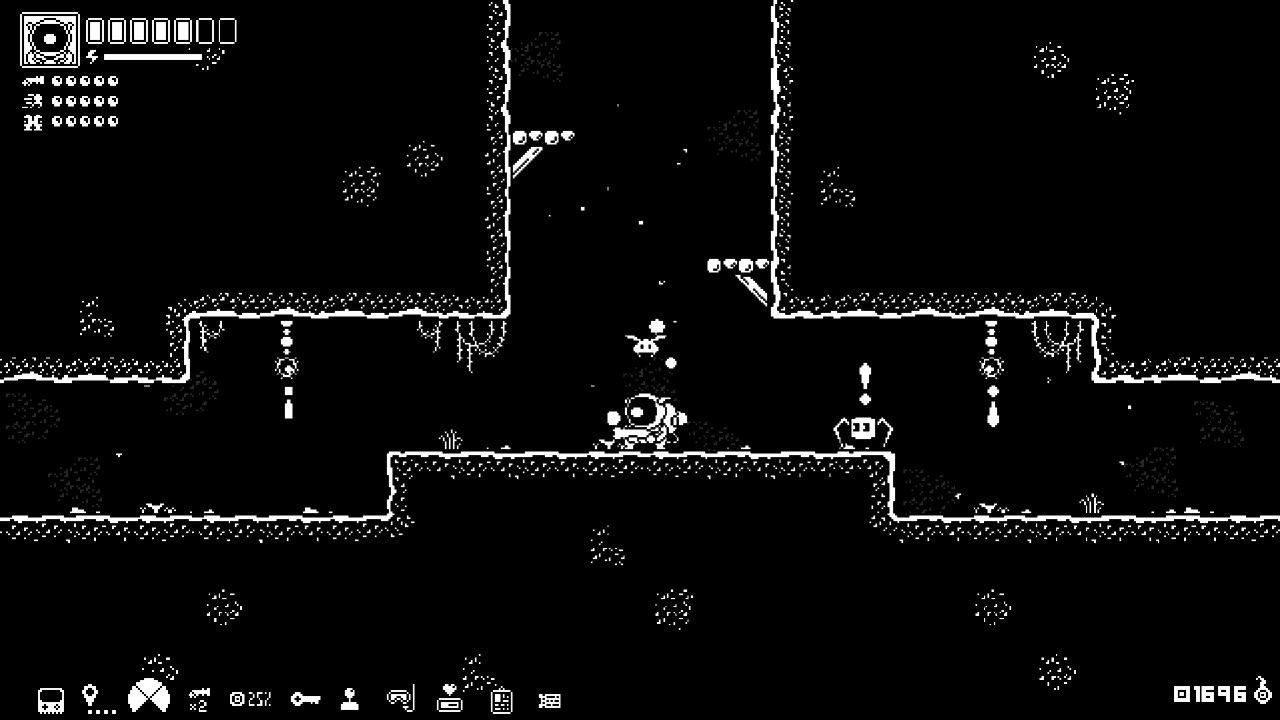
Enemy design is reasonably varied and comes straight from the Metroid playbook. You got your skittering ground guy, wall crawler, ceiling dweller, bouncing DVD screen saver — the gang’s all here. A mid-game buff to all standard enemies by the Big Bad keeps you on your toes, even if it feels cheaper than just designing progressively stronger foes the further into the planet you go. It’s clear from this sort of design choice that the game was made on a shoestring budget, but I felt the constraints of a light purse more keenly in other areas than this one.
Boss fights are where the game shines brightest, demanding the use of every ability you currently possess while you learn patterns and dodge for your life. Overcommitting likely means death, but you can only survive a bullet hell for so long before you get dragged into the depths and have to start fresh again. Critically, each boss feels distinct and well-crafted for the Astronite’s current moveset. Boss-as-skill-check is a staple of Metroid-likes, and this title gets high marks in that category. But: once the screen starts getting littered with visual stimuli during these fights, all of it black and white over additional layers of the same, it becomes hard to identify even a fraction of the threats to your life. Once again the limited color palette and general lack of textures unintentionally creates big challenges for the player, making the final boss fight in particular feel downright cheap.
VERDICT
Astronite is a byte-sized bop from a bygone era that controls well and generally feels good to play. The art style is charming but eventually causes problems with visibility that feel like unforced errors (especially during the otherwise excellent boss fights). The map draws from its influences well, but is ultimately held back by lukewarm item placement and the use of a shop to stuff in more pickups. If you get down with Metroid-likes, the limited playtime nevertheless makes this worth a breezy weekend playthrough.